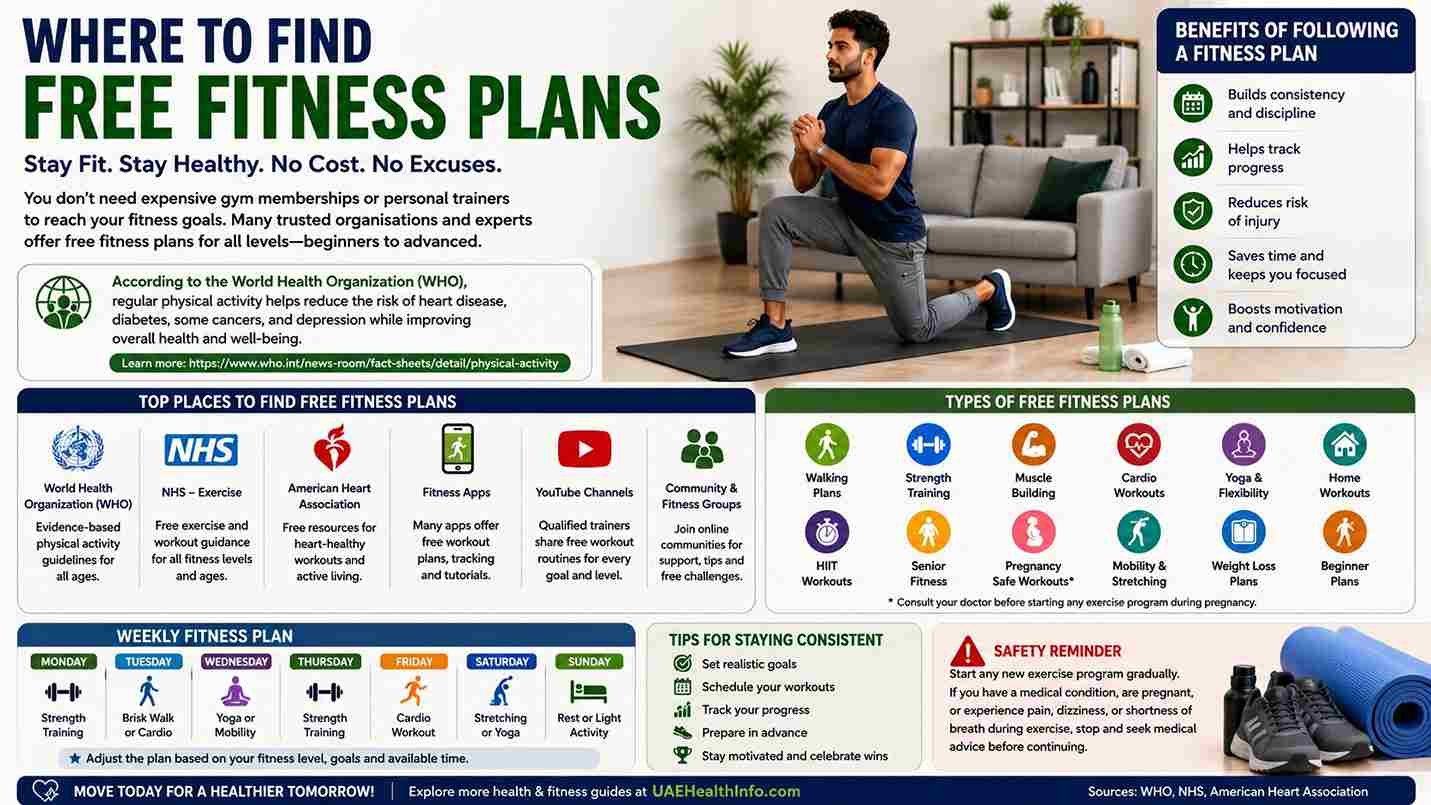
Where to Find Free Fitness Plans: Best Resources for Every Fitness Level
Staying active is one of the best ways to improve your physical and mental well-being, and it doesn’t have to be expensive. Whether your goal is to lose weight, build muscle, improve flexibility, or simply become more active, there are many free fitness plans available online from trusted health organisations and qualified fitness professionals. According to the World Health Organization (WHO), regular physical activity helps reduce the risk of heart disease, type 2 diabetes, certain cancers, and depression while improving overall quality of life. You can learn more about the recommended activity levels by visiting the WHO’s Physical Activity guidance: https://www.who.int/news-room/fact-sheets/detail/physical-activity.
A structured fitness plan provides clear guidance on what exercises to perform, how often to train, and how to progress safely over time. Instead of randomly choosing workouts each day, following a plan helps you stay consistent, monitor your progress, and reduce the risk of injury. The best part is that many high-quality workout programmes are completely free and suitable for beginners as well as experienced exercisers.
This guide explains where to find free fitness plans, how to choose the right programme for your goals, the different types of workout plans available, and practical tips to help you build a sustainable fitness routine.
Medical Disclaimer: This article is for educational purposes only and should not replace professional medical advice. If you have a chronic medical condition, are recovering from an injury, or are pregnant, consult a qualified healthcare professional before starting a new exercise programme.
Quick Facts About Free Fitness Plans
| Information | Details |
|---|---|
| Topic | Free Fitness Plans |
| Suitable For | Beginners to advanced fitness levels |
| Cost | Free |
| Workout Types | Cardio, strength, flexibility, balance, mobility |
| Equipment | Bodyweight or optional gym equipment |
| Session Length | Approximately 10–60 minutes |
| Best For | Weight management, strength, endurance, general health |
| Safety | Begin gradually and use proper exercise technique |
Why Follow a Structured Fitness Plan?
Many people begin exercising with enthusiasm but stop after only a few weeks because they don’t have a clear plan. A structured fitness programme provides direction and helps you develop healthy habits that are easier to maintain.
Helps You Stay Consistent
One of the biggest challenges in fitness is maintaining consistency. A workout plan tells you exactly what to do each day, removing the guesswork and making it easier to build a routine.
Tracks Your Progress
Following a structured programme allows you to monitor improvements in:
- Strength
- Endurance
- Flexibility
- Balance
- Weight management
- Overall fitness
Recording your workouts can also help you stay motivated as you see your progress over time.
Reduces the Risk of Injury
Well-designed fitness plans gradually increase exercise intensity instead of encouraging people to do too much too soon. This progressive approach gives muscles, joints, and connective tissues time to adapt.
Saves Time
Without a plan, many people spend valuable time deciding which exercises to perform. A ready-made programme lets you focus on completing your workout rather than planning it.
Increases Motivation
Completing scheduled workouts and reaching small milestones can boost confidence and encourage you to continue exercising.
Where to Find Free Fitness Plans
There are many reliable places to access free fitness programmes. Choosing resources from recognised health organisations and qualified professionals helps ensure the exercises are safe and evidence-based.
1. World Health Organization (WHO)
The World Health Organization (WHO) provides evidence-based guidance on physical activity for children, adults, and older people.
Although the WHO does not publish daily workout routines, it explains:
- Recommended weekly activity levels
- Health benefits of regular exercise
- Strength-training recommendations
- Advice for reducing sedentary behaviour
These guidelines provide an excellent foundation when choosing a fitness plan.
2. NHS Exercise Resources
The NHS offers free exercise guidance suitable for different ages and fitness levels.
Its resources include:
- Beginner exercise advice
- Walking programmes
- Strength exercises
- Stretching routines
- Flexibility exercises
- Fitness guidance for older adults
The information is easy to follow and based on current health recommendations.
3. American Heart Association
The American Heart Association provides educational resources that encourage regular physical activity to support heart health.
Their guidance includes:
- Walking programmes
- Cardio recommendations
- Strength-training advice
- Tips for staying active throughout the day
4. Reputable Fitness Apps
Many popular fitness apps include free workout plans that can be completed at home or in the gym.
Free plans often include:
- Daily workout schedules
- Exercise demonstrations
- Progress tracking
- Timers
- Beginner-friendly programmes
While premium features may require payment, many apps provide excellent free content.
5. Certified Fitness Professionals
Many certified personal trainers and physiotherapists share educational workout videos through their websites or online platforms.
When choosing online fitness content:
- Look for recognised certifications.
- Choose instructors who demonstrate correct technique.
- Avoid programmes promising unrealistic or rapid results.
- Select workouts that match your current fitness level.
Types of Free Fitness Plans
Different workout programmes are designed to meet different health and fitness goals.
Beginner Fitness Plans
These programmes introduce basic exercises while allowing the body to gradually adapt to increased activity.
They usually focus on:
- Bodyweight exercises
- Walking
- Gentle stretching
- Balance
- Basic strength training
Beginner plans are ideal for people who have not exercised regularly for some time.
Weight Loss Fitness Plans
Weight-loss programmes typically combine:
- Cardiovascular exercise
- Strength training
- Mobility work
- Healthy lifestyle habits
Regular exercise works best when combined with a balanced, nutritious diet.
Strength Training Plans
Strength-focused programmes help improve:
- Muscle strength
- Bone health
- Functional movement
- Daily physical performance
Exercises may use bodyweight, resistance bands, dumbbells, or gym equipment.
Muscle Building Programmes
Muscle-building plans generally involve progressive resistance exercises targeting different muscle groups throughout the week.
Proper recovery, balanced nutrition, and adequate protein intake are also important for supporting muscle growth.
Home Workout Plans
Home workouts have become increasingly popular because they require little or no equipment and can be completed at a time that suits your schedule. Many free fitness plans are specifically designed for people who prefer exercising at home.
Common home workout exercises include:
- Squats
- Lunges
- Push-ups
- Planks
- Glute bridges
- Mountain climbers
- Jumping jacks
- Burpees (for more advanced users)
A home workout plan can improve strength, endurance, and flexibility while eliminating the need for a gym membership.
Walking Fitness Plans
Walking is one of the easiest and most accessible forms of exercise. It is suitable for most healthy adults and can be adjusted to different fitness levels.
A beginner walking plan may include:
Week 1
- 20-minute walk
- 5 days per week
Week 2
- 25-minute walk
- Add short periods of faster walking
Week 3
- 30-minute brisk walk
- Include gentle hills if comfortable
Week 4
- 35–45 minutes
- Increase pace while maintaining good posture
Walking regularly supports heart health, strengthens muscles, improves mood, and helps with weight management.
HIIT (High-Intensity Interval Training)
HIIT involves alternating short periods of higher-intensity exercise with recovery periods.
A beginner session may include:
- 30 seconds of exercise
- 30–60 seconds of recovery
- Repeat for 15–20 minutes
Examples include:
- Squats
- High knees
- Step-ups
- Modified burpees
- Jumping jacks
HIIT can be time-efficient, but beginners should start slowly and focus on proper technique rather than speed.
Yoga and Flexibility Plans
Yoga combines stretching, controlled breathing, balance, and gentle strengthening exercises.
Benefits may include:
- Improved flexibility
- Better posture
- Reduced muscle tension
- Improved balance
- Stress management
Many reputable instructors provide beginner-friendly yoga sessions that require only a yoga mat or a comfortable floor space.
Mobility and Stretching Programmes
Mobility exercises improve joint movement and help reduce stiffness caused by prolonged sitting.
Common mobility exercises include:
- Neck stretches
- Shoulder rolls
- Hip circles
- Cat-cow stretches
- Thoracic spine rotations
- Hamstring stretches
Including five to ten minutes of mobility work before or after exercise may improve movement quality and flexibility.
Senior Fitness Plans
Older adults also benefit from regular physical activity.
Suitable exercises include:
- Walking
- Chair exercises
- Light resistance training
- Balance exercises
- Gentle stretching
- Tai Chi
Exercise programmes should match individual ability levels and any existing medical conditions.
Pregnancy Exercise Plans
Many pregnant women can remain physically active, but exercise should always be discussed with their healthcare provider.
Appropriate activities often include:
- Walking
- Swimming
- Prenatal yoga
- Gentle stretching
- Low-impact strength exercises
Avoid programmes that involve a high risk of falls, heavy contact, or exercises that are not recommended during pregnancy.
How to Choose the Right Fitness Plan
Not every workout programme suits every person. Choosing the right plan increases your chances of staying motivated and exercising safely.
Consider Your Fitness Level
Be honest about your current level of fitness.
If you’re new to exercise, begin with a beginner programme rather than an advanced routine.
Define Your Goals
Ask yourself what you want to achieve.
Your goal might be to:
- Lose weight
- Build muscle
- Improve heart health
- Increase flexibility
- Improve balance
- Feel more energetic
Choose a programme that aligns with your primary objective.
Consider Your Schedule
The best workout plan is one that fits into your lifestyle.
Even 20–30 minutes of regular exercise several days a week can contribute to better health.
Think About Available Equipment
Some programmes require only bodyweight exercises, while others use:
- Resistance bands
- Dumbbells
- Kettlebells
- Gym machines
Choose a plan that matches the equipment you have available.
Consider Existing Health Conditions
If you have arthritis, diabetes, heart disease, chronic back pain, or another long-term medical condition, speak with your healthcare professional before starting a new exercise programme.
Example Weekly Fitness Routine
A balanced weekly routine combines different types of physical activity.
| Day | Activity |
|---|---|
| Monday | Full-body strength training |
| Tuesday | Brisk walking or cycling |
| Wednesday | Stretching and mobility exercises |
| Thursday | Strength training |
| Friday | Cardio workout |
| Saturday | Yoga or flexibility session |
| Sunday | Rest or light walking |
Remember that this is only an example. Adjust the schedule to match your fitness level, health status, and personal goals.
Tips for Staying Consistent
Consistency is more important than perfection.
Here are some practical ways to maintain your routine:
Set Realistic Goals
Start with achievable targets and gradually increase the intensity or duration of your workouts.
Track Your Progress
Keep a simple fitness journal or use an app to record:
- Exercise sessions
- Walking distance
- Strength improvements
- Body measurements (if appropriate)
Monitoring progress can help keep you motivated.
Exercise With a Friend
Working out with a family member or friend can make exercise more enjoyable and improve accountability.
Prepare in Advance
Lay out your workout clothes, shoes, and equipment before your scheduled exercise session to make it easier to get started.
Celebrate Milestones
Recognise your achievements, whether it’s completing your first week of workouts or reaching a new personal best. Celebrating progress can help maintain motivation over the long term.
Common Mistakes to Avoid When Following a Free Fitness Plan
Free fitness plans can be highly effective, but avoiding common mistakes will help you exercise safely and achieve better results.
Doing Too Much Too Soon
Many beginners start with intense workouts every day, which can lead to muscle soreness, fatigue, or injury.
Instead:
- Begin gradually.
- Increase workout intensity over time.
- Allow your body time to adapt.
Consistency is more important than pushing yourself too hard in the first few weeks.
Skipping Warm-Ups
A proper warm-up prepares your muscles and joints for exercise.
Spend 5–10 minutes before each workout performing light activities such as:
- Brisk walking
- Marching in place
- Arm circles
- Shoulder rolls
- Gentle stretching
Ignoring Proper Technique
Performing exercises incorrectly can increase the risk of injury.
If you’re unsure how to perform an exercise:
- Watch demonstrations from qualified fitness professionals.
- Start with easier variations.
- Focus on quality rather than speed or the number of repetitions.
Forgetting Recovery
Your muscles need time to recover after exercise.
Recovery includes:
- Rest days
- Quality sleep
- Staying hydrated
- Eating a balanced diet
Recovery is an essential part of every successful fitness plan.
Setting Unrealistic Expectations
Fitness improvements take time.
Healthy progress depends on:
- Regular exercise
- Good nutrition
- Adequate sleep
- Consistency
Avoid programmes that promise dramatic results in just a few days or weeks.
Safety Note
Regular physical activity offers many health benefits, but it is important to exercise safely. Start any new fitness programme gradually and increase intensity over time. Stop exercising immediately if you experience chest pain, severe shortness of breath, dizziness, fainting, or sudden joint pain. If you have heart disease, diabetes, arthritis, are pregnant, or have another chronic medical condition, consult a qualified healthcare professional before beginning a new exercise programme.
Frequently Asked Questions
1. Where can I find free fitness plans?
You can find reliable free fitness plans from trusted health organisations such as the World Health Organization (WHO), the NHS, the American Heart Association, reputable fitness apps, and certified fitness professionals.
2. Are free workout plans effective?
Yes. A well-designed free fitness plan can improve strength, endurance, flexibility, and overall health when followed consistently.
3. Can I build muscle using a free fitness programme?
Yes. Many free strength-training programmes include progressive resistance exercises that support muscle development when combined with adequate nutrition and recovery.
4. Are home workouts enough?
For many people, home workouts provide enough exercise to improve fitness, especially when they include strength training, cardiovascular activity, and flexibility exercises.
5. How many days should I exercise each week?
Most healthy adults benefit from regular physical activity throughout the week. Aim to follow current physical activity recommendations and include both aerobic exercise and muscle-strengthening activities.
6. Which fitness plan is best for beginners?
Beginner-friendly programmes that focus on walking, bodyweight exercises, stretching, and basic strength training are often the safest place to start.
7. Do I need expensive equipment?
No. Many excellent fitness plans use only your body weight. Resistance bands or light dumbbells can be added later if desired.
8. Can I lose weight with free workout plans?
Regular exercise, combined with a balanced diet and healthy lifestyle habits, can support weight management. Results vary depending on your overall calorie intake, activity level, and individual health factors.
9. How long does it take to see results?
Many people notice improvements in energy, mood, and endurance within a few weeks of consistent exercise. Changes in strength, fitness, or body composition usually take longer and vary from person to person.
10. Is walking considered exercise?
Yes. Walking is an effective form of aerobic physical activity that supports heart health, improves fitness, and contributes to the recommended weekly activity levels.
Conclusion
If you’re wondering where to find free fitness plans, you’ll be pleased to know that there are many trustworthy resources available. International health organisations, reputable fitness websites, certified trainers, and free fitness apps provide structured programmes suitable for beginners, intermediate exercisers, and experienced athletes.
The most effective fitness plan is one that matches your current ability, supports your personal goals, and fits your daily routine. Whether you prefer walking, strength training, yoga, home workouts, or flexibility exercises, staying consistent and progressing gradually is the key to long-term success.
Remember that exercise works best when combined with healthy eating, adequate sleep, stress management, and regular hydration. Listen to your body, allow time for recovery, and seek professional advice if you have an underlying medical condition or develop pain during exercise.
At UAEHealthInfo.com, we are committed to providing accurate, evidence-based, and practical health information to help UAE residents make informed decisions about fitness, nutrition, preventive care, and overall well-being.