Foot Massager: Benefits, Features, Uses and Buying Guide
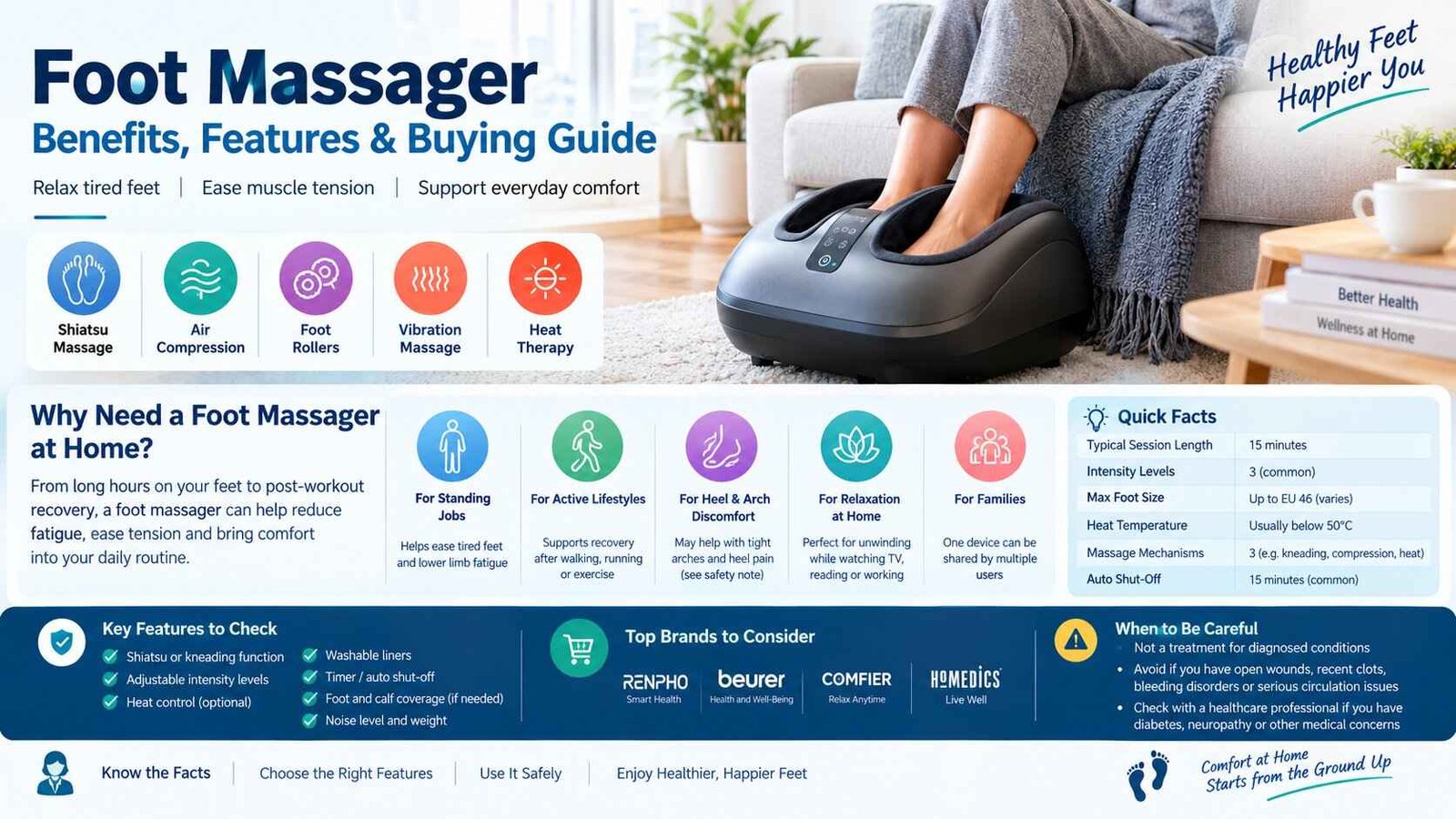
A foot massager can be a surprisingly useful home wellness device for people who spend long hours standing, walk extensively, exercise regularly, travel frequently, or simply finish the day with tired and tight feet. Modern models have moved well beyond basic vibrating pads. Depending on the design, a foot massager may combine Shiatsu kneading, rotating rollers, air compression, heat, vibration and adjustable intensity in one machine.
But choosing one is not simply about finding the device with the most features.
A powerful roller can feel excellent to one person and uncomfortable to another. Heat may be appealing for cold or tired feet but is not appropriate for everyone. Air compression can create a completely different sensation from mechanical kneading. A machine that looks impressive online may also become inconvenient if it is too heavy, noisy, difficult to clean or too small for the user’s feet.
This guide explains what a foot massager actually does, why people use one at home, which features deserve attention, what the research and user experience suggest, and when a massage device should not be treated as a solution for an underlying foot problem.
Safety Note: UAEHealthInfo.com is an informational platform and does not replace professional medical advice. If you have diabetes, circulation problems, numbness, swelling, or a foot injury, consult a healthcare professional before using a foot massager. For trusted foot-health information, see Cleveland Clinic – Foot Pain & Foot Care.
Quick Facts About Foot Massagers
| Feature | What buyers should know |
|---|---|
| Main massage types | Shiatsu, kneading, rolling, vibration and air compression |
| Heat | Available on many modern models, usually as an optional setting |
| Intensity | Some devices provide multiple pressure or massage levels |
| Automatic timer | Common on enclosed electric models |
| Foot-size range | Varies considerably between manufacturers and models |
| Foot coverage | Some massage only the sole; others cover the heel, arch, instep and sides |
| Calf coverage | Available on larger foot-and-calf machines |
| Washable liners | Useful when the machine is shared by several people |
| Best everyday use | Relaxation and temporary relief from tired or uncomfortable feet |
| Medical treatment | A consumer foot massager should not be presented as a cure for a diagnosed condition |
What Is a Foot Massager?
A foot massager is an electric or manual device designed to apply controlled pressure, movement, vibration, compression or warmth to parts of the foot.
Electric models generally fall into several categories.
Shiatsu foot massagers use mechanical nodes or rollers to imitate aspects of kneading and pressure-based massage. Some concentrate on the soles, while enclosed machines may also work around the heel, arch, sides and upper part of the foot.
Air-compression foot massagers use inflatable chambers that repeatedly tighten and release around the foot. The sensation is closer to rhythmic squeezing than rolling.
Foot roller massagers use rotating wheels or textured rollers beneath the feet. These are often simpler and smaller than enclosed electric machines.
Vibration foot massagers create rapid movement rather than deep mechanical kneading. They may appeal to people who dislike strong pressure.
Heated foot massagers add a warming function to the massage. Heat is generally a comfort feature rather than evidence that the machine is treating the cause of foot pain.
Some premium devices combine several of these mechanisms. For example, current models from manufacturers such as Beurer and RENPHO combine combinations of Shiatsu, air compression, heat and adjustable intensity rather than relying on a single massage method.
Why Do People Want a Foot Massager at Home?
The strongest reason is convenience.
A professional massage requires an appointment, travel and time. A home device can remain beside a sofa, desk or bed and be used whenever the person has finished work or exercise.
That matters particularly for people whose feet repeatedly become tired during ordinary daily activities.
1. Long Hours on Your Feet
Standing for hours places continuous load on the feet and lower legs. Retail employees, nurses, teachers, hospitality workers, warehouse staff, security personnel and other workers may spend much of their shift walking or standing on hard surfaces.
By the end of the day, the complaint may not be a specific injury. It may simply be a combination of:
- tired soles
- tight arches
- aching heels
- general foot fatigue
- stiff ankles
- uncomfortable calves
- a desire for pressure or warmth
A foot massager gives this group an easy recovery ritual without requiring another appointment.
2. People Who Walk or Exercise Regularly
Walking, running, gym training, hiking and recreational sports all increase the workload placed on the feet.
A massage device can be used as part of a post-activity routine when the goal is relaxation and temporary comfort.
However, there is an important distinction between feeling better after massage and treating an injury.
If exercise repeatedly produces sharp pain, swelling, numbness or difficulty walking, using a massager to hide the symptom is not a substitute for finding out what is causing it.
3. People With Tired or Heavy-Feeling Feet
Some people are not looking for treatment at all. They simply want their feet to feel less worked-out at the end of the day.
This is where a combination of gentle kneading, rolling and optional warmth may be more appealing than a very aggressive machine.
The best setting is not necessarily the strongest setting.
For many users, being able to reduce pressure is more important than having a “deep tissue” mode.
4. People Who Prefer an At-Home Wellness Routine
A foot massager can fit into routines that would otherwise be difficult to maintain.
Someone might use it while:
- watching television
- reading
- listening to a podcast
- sitting at a desk
- relaxing after work
- preparing for bedtime
- recovering after a long walk
This convenience also explains why automatic timers matter. Some current devices use approximately 15-minute automatic shut-off cycles, reducing the temptation to keep a motorized massage running indefinitely.
How Does a Foot Massager Work?
The sensation depends heavily on the mechanism.
Shiatsu and Kneading
Mechanical massage heads move against the sole or sides of the foot. Depending on the design, the movement can feel like pressing, kneading or rolling.
This is often the preferred mechanism for people who want to feel the massage rather than simply experience vibration.
Air Compression
Air chambers inflate and deflate around the feet.
Instead of repeatedly pressing one point, compression creates a wrapping or squeezing sensation. Some models allow the user to adjust the compression intensity or select different areas such as the heel or instep.
Rollers
Rollers move beneath the foot and apply repeated pressure across the sole.
The roller shape matters. A smooth roller produces a different sensation from a deeply textured or nodular design.
This is one reason product photographs alone are not enough when comparing machines.
Heat
Heat adds warmth during the massage.
Some users enjoy it because warm feet can feel more comfortable after a cold day or prolonged inactivity. But heat should not be confused with a proven treatment for the underlying cause of foot pain.
People with reduced temperature sensation should be particularly cautious with heated devices.
Vibration
Vibration creates rapid, relatively shallow movement.
It can be useful for people who find strong rollers uncomfortable, although the sensation is quite different from a kneading or compression machine.
Foot Massager vs Manual Foot Roller
An electric foot massager is not automatically better than a simple manual roller.
A manual roller has several advantages:
- low purchase cost
- no electricity
- easy storage
- simple construction
- easy control over pressure
- little mechanical noise
An electric device becomes more attractive when the user wants features such as air compression, automatic programs, heat, multiple intensity levels or hands-free operation.
The decision therefore depends on what the person actually wants from the product.
Someone who only wants five minutes of pressure beneath the arches may not need a large enclosed machine.
Someone who wants a structured evening routine involving compression, heat and kneading may prefer the electric option.
What Should You Look For in a Foot Massager?
Do not judge a machine only by its number of massage modes.
The more useful specifications are:
Foot Size
This is one of the easiest details to overlook.
A device can have excellent rollers and compression but still be a poor purchase if the user’s feet do not fit comfortably inside the massage chamber.
Always check the manufacturer’s maximum shoe or foot size.
For example, Beurer’s FM 90 currently lists compatibility up to EU shoe size 46.
Intensity Control
Different feet tolerate different levels of pressure.
Multiple intensity settings are therefore more useful than a single “strong massage” setting.
A beginner may prefer gentle pressure, while another user may want considerably more mechanical movement.
Heat Control
Look for a device where heat can be switched on or off independently.
This gives the user more flexibility than a machine where warmth is permanently tied to a particular massage program.
Washable Covers
Enclosed foot massagers come into direct contact with skin and socks.
Removable, washable liners or covers are therefore an important hygiene feature, particularly when several family members share the machine.
Automatic Shut-Off
A timer makes the device easier to use consistently and avoids unnecessarily long sessions.
A 15-minute automatic shut-off is common among consumer models.
Foot and Calf Coverage
If the main complaint extends above the ankle, a foot-only model may feel limited.
Foot-and-calf machines occupy more space and usually cost more, but they can provide a broader massage area.
The important question is not whether calf coverage sounds impressive. It is whether the buyer will actually use it.
Are Foot Massagers Actually Worth It?
This is one of the most important questions to answer honestly.
For relaxation and temporary comfort, a foot massager can be a worthwhile home purchase for someone who enjoys the sensation and uses it regularly.
The situation becomes less straightforward when the buyer expects the machine to permanently eliminate plantar fasciitis, heel pain, nerve problems or circulation disorders.
Real-world discussions are mixed. Some users report noticeable short-term comfort, while others say aggressive massage makes their symptoms worse. Recent Reddit discussions also show people debating whether foot massagers provide lasting improvement or mainly temporary relief.
That difference is important.
A device can be useful without being a medical treatment.
The better question is:
Does this product make your feet feel more comfortable, and can you use it safely and consistently?
That is a much more realistic standard for a home wellness device.
Frequently Asked Questions About Foot Massagers
Is a foot massager worth the money?
Yes, it can be useful for relaxing tired or sore feet, especially if you use it regularly.
Does a foot massager help after standing all day?
It may provide temporary relief from foot soreness and muscle tension after prolonged standing.
Is Shiatsu better than vibration?
Shiatsu provides kneading and pressure, while vibration gives a lighter sensation. The better option depends on personal preference.
Is heat useful in a foot massager?
Heat can make the massage feel more comfortable and relaxing, but it should be used carefully by people with reduced foot sensation.
Does a foot massager help plantar fasciitis?
It may provide temporary comfort, but it should not be considered a guaranteed treatment for plantar fasciitis.
Can I use a foot massager every day?
Some people use one daily, but follow the manufacturer’s instructions and stop if it causes pain or discomfort.
Will a foot massager fit large feet?
Check the manufacturer’s stated foot or shoe-size range before buying, as sizes vary between models.
How long should I use a foot massager?
Many models are designed for sessions of around 15 to 30 minutes. Always follow the instructions for your specific device.
Final Words
A foot massager can be a useful addition to a home relaxation routine, particularly for people who spend long hours standing, walking, or exercising. The best choice depends on practical factors such as massage type, pressure settings, heat control, foot size, cleaning, and warranty.
Use it for comfort and relaxation rather than as a replacement for medical treatment. If foot pain is persistent, severe, or accompanied by swelling, numbness, or other unusual symptoms, it is better to speak with a healthcare professional.