Understanding Heart Rhythm Monitoring and Modern Cardiac Care
Heart problems do not always cause symptoms that occur throughout the day. A person may feel perfectly well during a clinic visit but experience palpitations, dizziness or an unusually fast heartbeat at home or during routine activities. This can make some rhythm disorders difficult to identify with a single ECG.
Cardiology therefore includes several forms of heart monitoring that help doctors understand how the heart behaves over a longer period. Along with ECGs and echocardiography, ambulatory monitoring can record electrical activity while a person continues with normal daily activities.
Modern cardiac services also cover coronary artery disease, heart failure, hypertension, valve disorders and other cardiovascular conditions.
What Is a Holter Monitor?
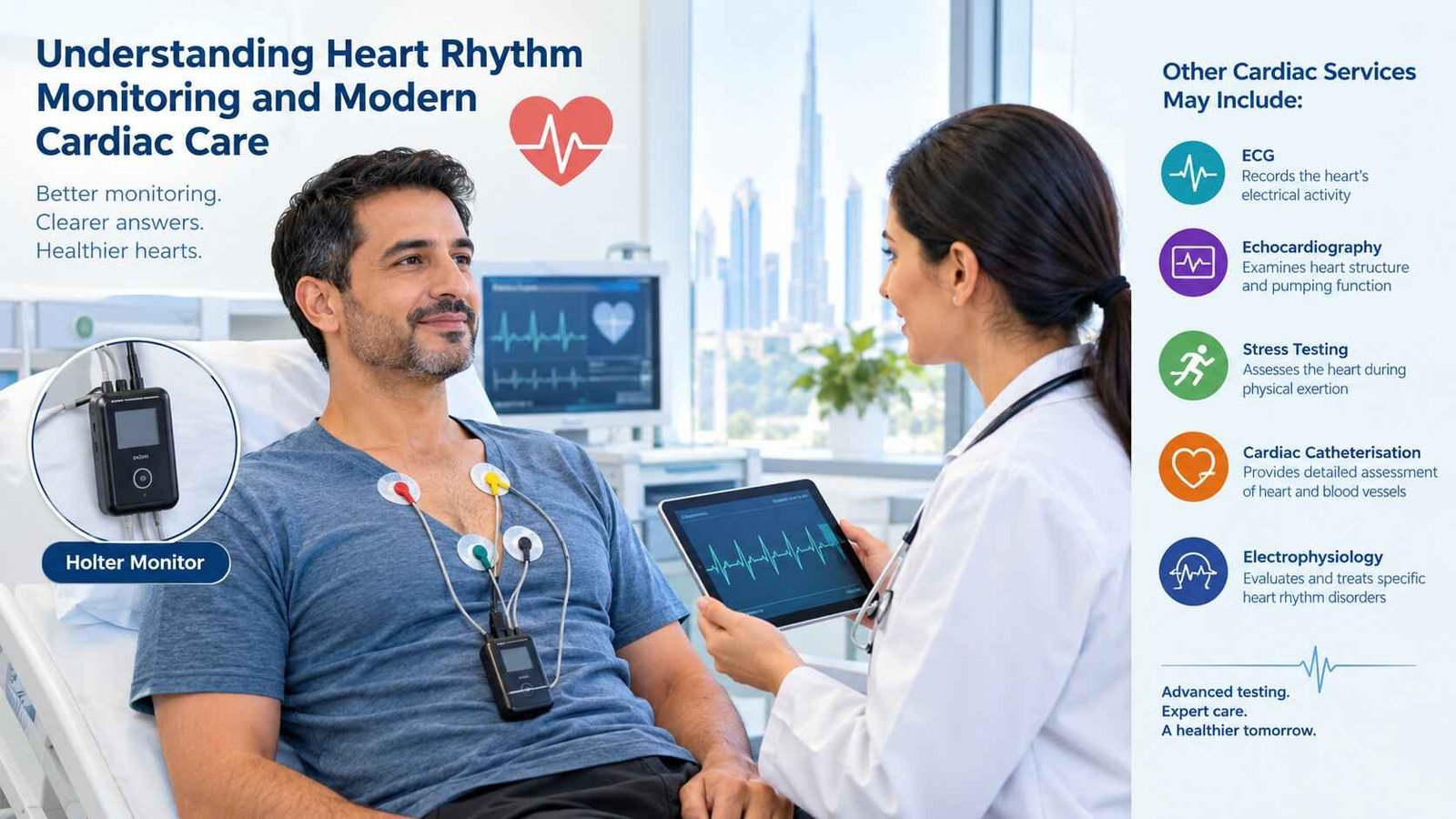
A Holter monitor is a small portable device that records the heart’s electrical activity continuously, usually while the patient goes about their usual routine. Unlike a standard ECG, which records the heart for a short period, a Holter monitor can capture changes that may occur at different times of the day.
The device is connected to small electrodes placed on the chest. It records the heart rhythm while the person walks, rests, works and sleeps. The patient may also be asked to note symptoms such as palpitations, dizziness, chest discomfort or faintness and record when they occur.
Doctors can then compare the recorded heart rhythm with the timing of symptoms. This may help identify irregular heartbeats that were not detected during a routine consultation.
People searching for a Holter monitor test in Dubai can discuss their symptoms with a cardiologist to determine whether extended heart monitoring is appropriate.
When Might Holter Monitoring Be Recommended?
A cardiologist may suggest Holter monitoring when symptoms appear intermittently or when a routine ECG does not provide enough information.
It may be considered for people experiencing:
- Repeated palpitations or a racing heartbeat
- Episodes of dizziness or light-headedness
- Unexplained fainting
- Suspected irregular heart rhythms
- Symptoms that occur during particular activities or at night
- Follow-up after treatment for certain rhythm disorders
Holter monitoring can also be useful when a doctor wants to assess how frequently an abnormal rhythm occurs or determine whether symptoms correspond with changes in heart rate.
The decision to use a Holter monitor depends on the patient’s symptoms and medical history. It is not required for every person with palpitations or chest discomfort.
What Happens During the Test?
The test is generally straightforward. A healthcare professional places electrodes on the patient’s chest and connects them to the recording device. The monitor is then worn for the period advised by the treating doctor.
Patients can usually continue with their normal activities, although they may receive specific instructions about bathing, exercise or activities that could damage the equipment. Keeping a record of symptoms and their timing can help the cardiologist interpret the results.
Once monitoring is complete, the device is returned, and the recorded information is reviewed. The cardiologist looks for changes in heart rate, abnormal rhythms and other patterns that may require further evaluation.
Other Cardiac Tests Used Alongside Monitoring
Holter monitoring is only one part of cardiac assessment. Depending on the patient’s symptoms, a cardiologist may recommend additional investigations.
An ECG provides a short recording of the heart’s electrical activity. An echocardiogram uses ultrasound to assess the heart chambers, valves and pumping function. Exercise testing may be useful when symptoms are related to physical activity.
For suspected coronary artery disease, further investigations may be needed. A cardiac catheterisation laboratory can support coronary angiography, angioplasty, stenting and other selected procedures.
Using more than one type of test can give doctors a clearer picture when symptoms have several possible causes.
Managing Heart Rhythm Disorders
An abnormal rhythm does not always require treatment. Some rhythm changes are harmless, while others can affect blood flow or increase the risk of complications.
If monitoring identifies a significant arrhythmia, the cardiologist may recommend medicines, additional testing, lifestyle measures or a specialised procedure. Some patients may require electrophysiology assessment or an implanted device, depending on the type of rhythm problem.
Treatment is based on the specific rhythm disturbance rather than simply on the presence of an irregular heartbeat.
Choosing a Hospital for Cardiac Assessment
When comparing a heart hospital in Dubai, patients may consider whether the facility provides both routine cardiac investigations and access to specialist treatment when further evaluation is required.
| Cardiac Service | Purpose |
| ECG | Records the heart’s electrical activity at a specific point in time |
| Holter monitoring | Tracks heart rhythm during daily activities |
| Echocardiography | Examines heart structure and pumping function |
| Stress testing | Assesses the heart during physical exertion |
| Cardiac catheterisation | Provides detailed assessment of selected heart and blood vessel conditions |
| Electrophysiology | Evaluates and treats specific heart rhythm disorders |
.
Conclusion
Some heart rhythm problems appear only occasionally, making them difficult to identify during a short consultation. Holter monitoring gives cardiologists a longer record of the heart’s electrical activity and can help connect symptoms with changes in rhythm.
The test is usually considered alongside the patient’s medical history, examination and other cardiac investigations. If symptoms such as recurrent palpitations, dizziness or fainting continue, speaking with a cardiologist can help determine whether heart monitoring or another form of assessment is needed.
For patients seeking cardiac care in Dubai, access to diagnostic testing, specialist consultations, emergency services and appropriate follow-up can help ensure that heart-related concerns are assessed at the right stage.
Disclaimer: UAEHealthInfo.com is an informational platform and does not provide medical advice. This article is for general educational purposes only. For trusted heart-health information, visit the World Health Organization (WHO) or consult a qualified cardiologist.