Understanding Breast Health Screening Options for Women in the UAE
Breast cancer remains the most commonly diagnosed cancer among women in the United Arab Emirates, accounting for approximately one-third of all female cancer cases. Early detection through regular screening significantly improves treatment outcomes, yet many women remain uncertain about when to begin screening, which tests to choose, and how often they should undergo examination. The availability of advanced diagnostic technologies in Abu Dhabi and Dubai has expanded screening options beyond traditional mammography, but this variety can also create confusion about the most appropriate approach for individual circumstances.
When to Begin Breast Cancer Screening
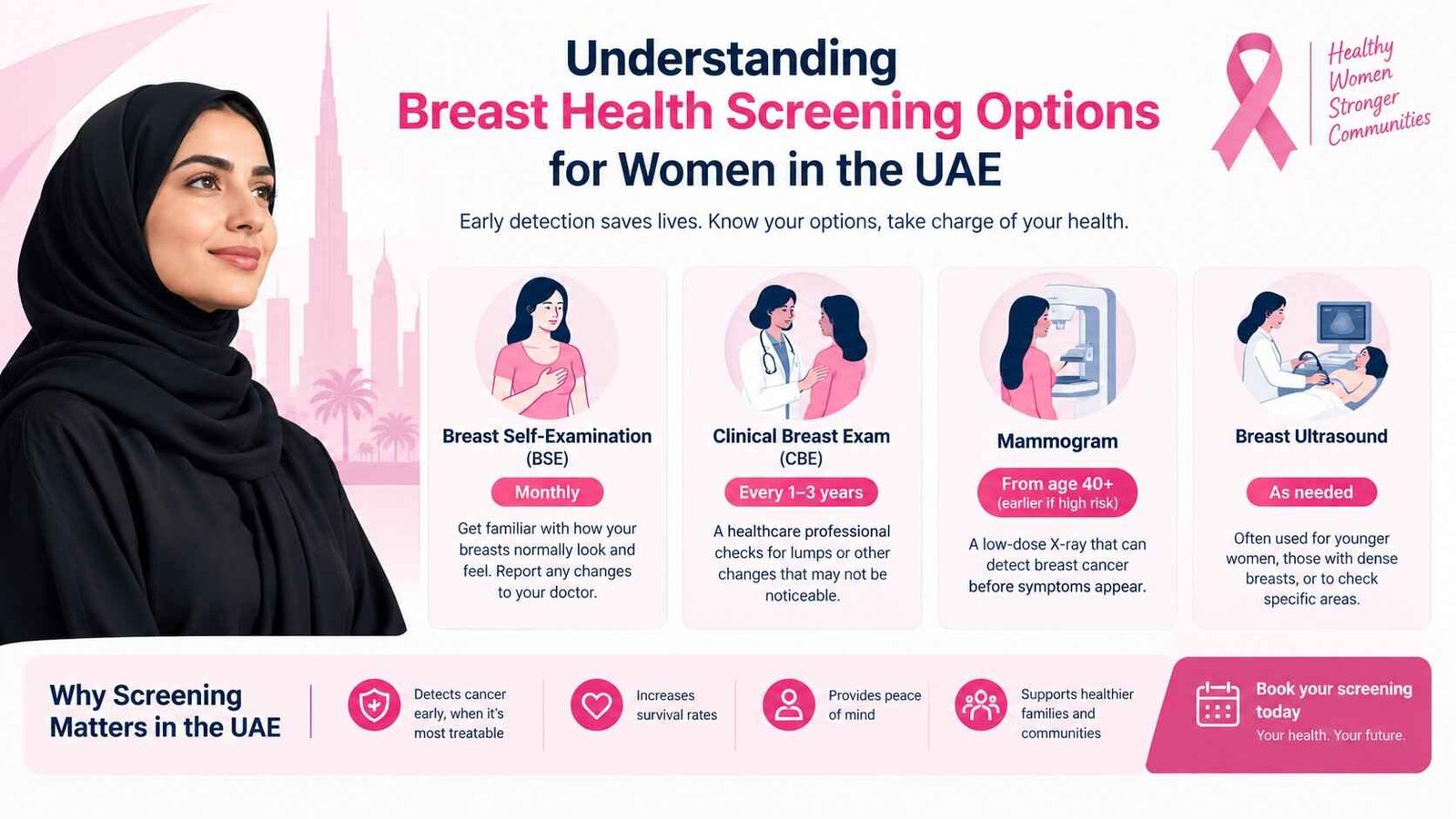
International guidelines vary on the optimal age to begin routine breast cancer screening, with recommendations typically ranging from 40 to 50 years for women at average risk. The UAE Ministry of Health and Prevention recommends that women begin annual mammography screening at age 40. However, women with elevated risk factors should discuss earlier screening with their healthcare provider. These risk factors include a family history of breast or ovarian cancer, known genetic mutations such as BRCA1 or BRCA2, previous chest radiation therapy during adolescence or young adulthood, and certain benign breast conditions identified through biopsy.
Women with a first-degree relative diagnosed with breast cancer before age 50 may benefit from beginning screening ten years earlier than the age at which their relative was diagnosed. For example, if a mother was diagnosed at 42, her daughter might begin screening at 32. Genetic counseling and testing can help clarify individual risk and guide personalized screening schedules.
Comparing Screening Technologies
Standard digital mammography has served as the cornerstone of breast cancer screening for decades, using low-dose X-rays to create two-dimensional images of breast tissue. More recently, three-dimensional mammography, also called digital breast tomosynthesis, has become widely available at major medical centers across the UAE. This technology takes multiple images from different angles, allowing radiologists to examine breast tissue layer by layer. Studies indicate that 3D mammography detects approximately 40 percent more invasive cancers than traditional 2D mammography while also reducing false-positive results that lead to unnecessary follow-up procedures.
For women with dense breast tissue, which appears white on mammograms and can obscure tumors that also appear white, supplemental screening methods may be recommended. Breast ultrasound uses sound waves to create images and can detect cancers that mammography misses in dense tissue. Breast MRI, which uses magnetic fields and radio waves, offers the highest sensitivity for cancer detection and is typically reserved for women at high risk or those requiring additional evaluation after suspicious findings on other imaging tests.
The Role of Clinical Breast Examination and Self-Awareness
While imaging technology has advanced considerably, clinical breast examination performed by a trained healthcare provider remains a valuable component of comprehensive breast health care. During these examinations, providers check for lumps, skin changes, nipple discharge, or other abnormalities that warrant further investigation. Women who receive care at facilities like specialized women’s health centers often benefit from coordinated care that includes both screening and clinical assessment.
Medical organizations have shifted away from recommending structured monthly self-examination in favor of encouraging breast self-awareness. This approach emphasizes familiarity with how breasts normally look and feel throughout the menstrual cycle, enabling women to notice changes that should be reported to a healthcare provider. Changes to monitor include new lumps or thickening, skin dimpling or puckering, nipple retraction, unexplained pain that persists, or clear or bloody nipple discharge. Reporting these changes promptly allows for timely evaluation and, if necessary, diagnostic procedures such as ultrasound or biopsy.
Accessing Comprehensive Breast Health Services in Abu Dhabi
Women in Abu Dhabi have access to multidisciplinary breast health programs that integrate screening, diagnosis, treatment, and reconstruction services. Cleveland Clinic Abu Dhabi’s Breast Health & Cancer Program exemplifies this comprehensive approach, offering advanced screening technologies including 3D mammography and breast MRI, image-guided biopsy for accurate diagnosis, and a full spectrum of treatment options from medical oncology to surgical intervention. For women seeking reliable information about common misconceptions surrounding this disease, resources focused on breast cancer awareness can help distinguish evidence-based facts from persistent myths that may delay screening or treatment. Their genetic testing and high-risk assessment services help identify women who may benefit from intensified surveillance or preventive strategies.
Understanding Diagnostic Follow-Up Procedures
When screening detects an abnormality, additional diagnostic imaging or biopsy may be necessary to determine whether cancer is present. A callback for additional imaging occurs in approximately 10 percent of screening mammograms and does not necessarily indicate cancer. Diagnostic mammography provides magnified views or additional angles of the area in question, while targeted ultrasound can help characterize whether a finding is a fluid-filled cyst or a solid mass requiring further evaluation.
If imaging remains inconclusive or suggests cancer, a biopsy will be recommended. Core needle biopsy, performed with image guidance using ultrasound, mammography, or MRI, allows physicians to remove small tissue samples for laboratory analysis while avoiding the need for surgical biopsy in most cases. Results typically return within several days. When breast cancer is diagnosed, understanding treatment options for different stages becomes essential, and educational resources about metastatic disease can help patients and families understand the full spectrum of possibilities.
Insurance Coverage and Screening Accessibility
Most health insurance plans in the UAE cover annual screening mammography for women beginning at age 40, though specific coverage details vary by insurer and policy. Women should verify their coverage for different screening modalities, as supplemental tests like breast MRI may require pre-authorization or may only be covered for women meeting specific high-risk criteria. Some facilities offer self-pay screening options for women without insurance coverage or those seeking screening outside their policy’s designated network.
Public health initiatives in the UAE have worked to increase screening accessibility, particularly during October’s Breast Cancer Awareness Month when some facilities offer reduced-cost or complimentary screening mammograms. However, women should not delay screening until promotional periods if they are due for routine examination or experiencing concerning symptoms.
Making Informed Screening Decisions
The decision about when to begin screening and which tests to include should be made collaboratively between a woman and her healthcare provider, taking into account individual risk factors, breast density, personal preferences, and access to follow-up care. Women at average risk can typically follow standard screening guidelines, while those at elevated risk benefit from personalized surveillance plans that may include earlier initiation, more frequent intervals, or supplemental imaging methods.
Maintaining consistent screening at appropriate intervals offers the greatest benefit, as regular comparison of images over time helps radiologists identify subtle changes that might represent early cancer. Switching between facilities or going long periods between screenings can make these comparisons more difficult. Women who relocate or change healthcare providers should request that their previous screening images be transferred to their new facility to maintain continuity of care.
Medical Disclaimer: UAEHealthInfo.com is an informational hub that provides general health and wellness information for educational purposes only. The content on this website is not intended to replace professional medical advice, diagnosis, or treatment. Always consult a qualified healthcare professional for medical concerns, screening recommendations, or treatment decisions. Do not ignore or delay seeking medical advice based on information published on this website. In case of a medical emergency, contact your local emergency services.