How to Reduce Neck Pain Naturally: Safe Home Remedies and Prevention Tips
Neck pain is one of the most common musculoskeletal problems affecting people of all ages. Whether you spend long hours working at a computer, frequently look down at your smartphone, drive for extended periods, or have poor sleeping posture, your neck muscles and joints can become strained over time. Fortunately, many mild cases improve with simple self-care measures, healthy lifestyle habits, and gentle exercises. For trusted information about bone, joint, and muscle health, you can also refer to the National Institute of Arthritis and Musculoskeletal and Skin Diseases (NIAMS) at https://www.niams.nih.gov/.
The neck, also known as the cervical spine, supports the weight of your head while allowing you to turn, bend, and tilt it in different directions. Because it is highly flexible, it is also vulnerable to muscle strain, poor posture, repetitive movements, and injuries. While natural remedies can often relieve mild discomfort, persistent or severe neck pain may indicate an underlying medical condition that requires professional evaluation.
This guide on Uaehealthinfo.com explains how to reduce neck pain naturally, including the most common causes, effective home remedies, neck stretches, exercises, prevention tips, and when you should seek medical care.
Medical Disclaimer: This article is for informational purposes only and should not replace professional medical advice, diagnosis, or treatment. If your symptoms persist or worsen, consult a qualified healthcare professional.
Quick Facts About Neck Pain
| Information | Details |
|---|---|
| Symptom | Neck pain, stiffness, or discomfort |
| Common Causes | Poor posture, muscle strain, prolonged screen use, arthritis, injuries |
| Home Remedies | Heat therapy, stretching, posture correction, gentle activity |
| Exercises | Chin tucks, shoulder rolls, gentle neck stretches |
| Prevention | Good posture, ergonomic workstation, regular movement |
| Emergency Signs | Severe injury, numbness, weakness, fever, difficulty walking |
Understanding Neck Pain
Understanding how the neck works can help explain why pain develops and how natural treatments may provide relief.
The neck contains several important structures that work together to support movement while protecting the spinal cord.
Cervical Spine
The cervical spine consists of seven small bones called vertebrae. These bones support the head and allow movements such as turning, bending, and looking up or down.
Muscles
Numerous muscles support the head and shoulders. Overuse, stress, poor posture, or sudden movements can strain these muscles, resulting in pain and stiffness.
Ligaments
Ligaments connect the bones of the neck and help stabilise the cervical spine. Injury or excessive stretching can damage these supportive tissues.
Tendons
Tendons attach muscles to bones and allow smooth movement. Repetitive strain may irritate these tendons and contribute to neck discomfort.
Intervertebral Discs
Soft discs between the vertebrae act as shock absorbers. As people age, these discs gradually lose flexibility and may bulge or herniate, potentially causing pain or nerve compression.
Nerves
Several nerves pass through the neck before extending into the shoulders, arms, and hands. Pressure on these nerves can cause pain, numbness, tingling, or weakness.
Common Causes of Neck Pain
Many different conditions can lead to neck pain. Identifying the cause helps determine the most appropriate treatment.
1. Poor Posture
Poor posture is one of the leading causes of neck pain.
Looking down at a phone, slouching while sitting, or working at a computer with the screen positioned too low can place extra stress on the neck muscles and joints.
Common examples include:
- Working long hours at a desk
- Reading with the head bent forward
- Watching television in an awkward position
- Driving for extended periods
Improving posture is often one of the simplest and most effective ways to reduce neck pain naturally.
2. Text Neck
“Text neck” describes neck pain caused by repeatedly looking down at smartphones, tablets, or other handheld devices.
As the head tilts forward, the neck muscles must support significantly more weight, increasing strain over time.
Symptoms may include:
- Neck stiffness
- Shoulder pain
- Upper back discomfort
- Headaches
- Reduced neck movement
Taking regular breaks and holding devices closer to eye level may help reduce this strain.
3. Prolonged Computer Work
Many office workers experience neck pain after spending several hours at a computer.
Contributing factors include:
- Poor chair support
- Incorrect monitor height
- Inadequate desk ergonomics
- Limited movement during the day
Adjusting your workstation and standing up every 30–60 minutes can help prevent muscle fatigue.
4. Muscle Strain
Muscle strain often occurs after:
- Heavy lifting
- Sudden twisting movements
- Sleeping in an awkward position
- Carrying heavy bags on one shoulder
- Overexertion during exercise
Most mild muscle strains improve with rest, gentle movement, and appropriate self-care.
5. Poor Sleeping Position
Sleeping with the neck twisted or using an unsupportive pillow can lead to morning stiffness and pain.
Sleeping on your back or side with a supportive pillow generally places less stress on the cervical spine than sleeping on your stomach.
6. Stress and Muscle Tension
Emotional stress can cause muscles around the neck and shoulders to tighten without you noticing.
This tension may result in:
- Neck stiffness
- Shoulder tightness
- Tension headaches
- Reduced flexibility
Relaxation techniques and stress management can help reduce muscle tension.
7. Arthritis
As people age, the joints in the neck may gradually wear down.
Osteoarthritis can cause:
- Pain
- Morning stiffness
- Reduced neck movement
- Grinding sensations during movement
Rheumatoid arthritis, an autoimmune condition, can also affect the cervical spine in some people.
8. Herniated Disc
A herniated or “slipped” disc occurs when part of a spinal disc presses on a nearby nerve.
Possible symptoms include:
- Neck pain
- Pain radiating into the shoulder or arm
- Tingling
- Numbness
- Muscle weakness
Medical evaluation is important if nerve-related symptoms occur.
9. Whiplash
Whiplash is a neck injury commonly associated with road traffic collisions or sudden impacts.
Symptoms may include:
- Neck pain
- Stiffness
- Headaches
- Shoulder pain
- Limited movement
Professional assessment is recommended after any significant neck injury.
10. Pinched Nerve
A compressed nerve in the neck can cause pain that travels into the shoulder, arm, or hand.
People may also experience:
- Tingling
- Numbness
- Weakness
- Burning pain
Treatment depends on the underlying cause and severity of nerve compression.
Natural Ways to Reduce Neck Pain
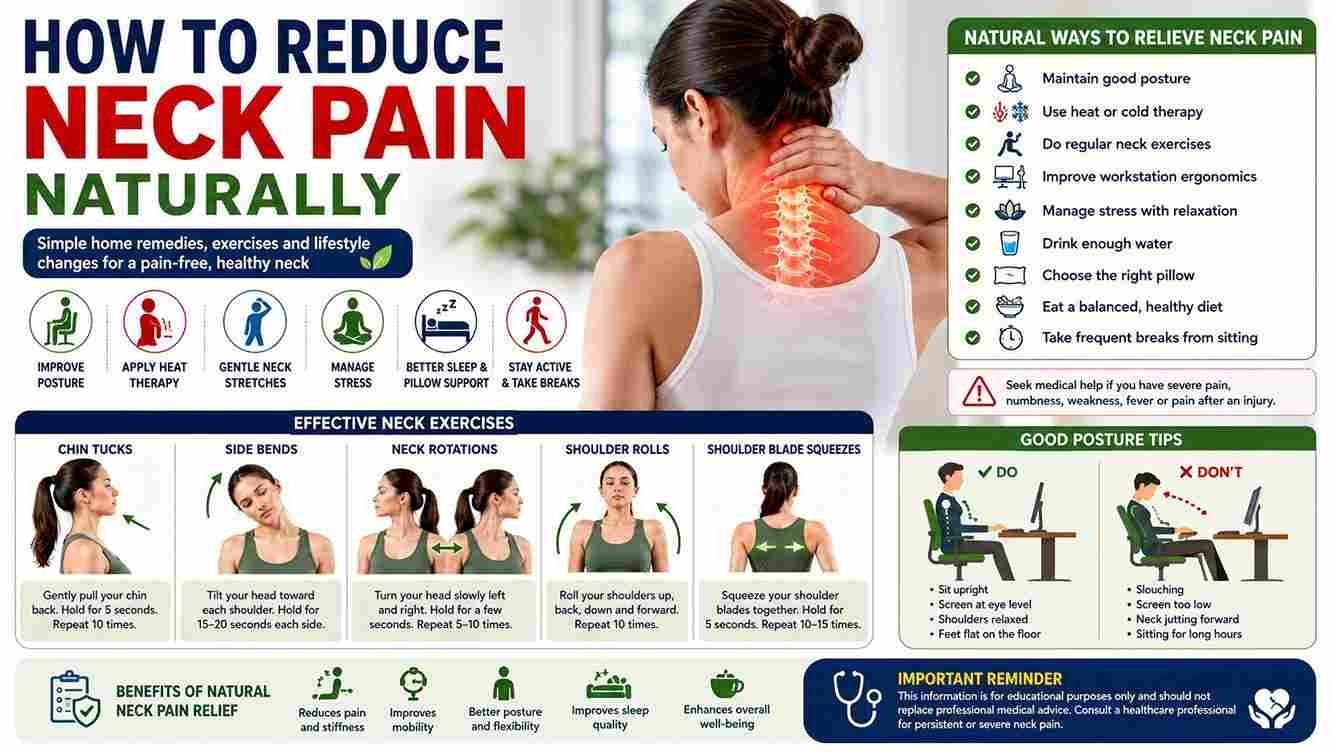
Many cases of mild to moderate neck pain improve with simple lifestyle changes and self-care. These natural methods focus on reducing muscle tension, improving posture, and supporting the body’s healing process. If your symptoms are severe or persist despite these measures, consult a qualified healthcare professional.
Improve Your Posture
Good posture is one of the most effective ways to reduce neck pain naturally.
When standing or sitting:
- Keep your head aligned over your shoulders.
- Relax your shoulders instead of hunching them.
- Keep both feet flat on the floor when seated.
- Avoid leaning forward for long periods.
- Hold your phone at eye level instead of looking down.
Small posture corrections throughout the day can significantly reduce strain on your neck muscles.
Apply Heat Therapy
Heat helps relax tight muscles and improve blood circulation.
You can use:
- A warm towel
- A heating pad
- A hot water bottle wrapped in a towel
- A warm shower
Apply heat for 15–20 minutes at a time. Avoid using excessive heat that could burn the skin.
Try Cold Therapy
If your neck pain started after a minor injury or intense physical activity, applying a cold pack during the first 24–48 hours may help reduce inflammation and discomfort.
Wrap the ice pack in a towel and apply it for 15–20 minutes at a time.
Perform Gentle Neck Stretches
Gentle stretching helps improve flexibility and reduce muscle tightness.
Move slowly and stop immediately if you experience sharp or worsening pain.
Simple stretches include:
- Slowly tilting your head toward each shoulder.
- Looking left and right without forcing the movement.
- Bringing your chin gently toward your chest.
- Looking slightly upward without overextending your neck.
Stretching should feel comfortable—not painful.
Stay Physically Active
Complete bed rest is usually not recommended for uncomplicated neck pain.
Light activities such as walking can:
- Improve blood circulation
- Reduce stiffness
- Maintain muscle flexibility
- Support recovery
Avoid activities that significantly increase your pain.
Improve Your Workstation Ergonomics
Many people spend several hours each day using computers or laptops.
To reduce neck strain:
- Position your monitor at eye level.
- Sit with your back fully supported.
- Keep your elbows close to your body.
- Place your keyboard within comfortable reach.
- Keep your wrists in a neutral position.
Good workstation ergonomics can help prevent recurring neck pain.
Sleep in a Better Position
Sleeping posture affects the muscles and joints of your neck.
Experts generally recommend:
- Sleeping on your back or side.
- Keeping your neck aligned with your spine.
- Avoiding sleeping on your stomach whenever possible, as it places additional strain on the neck.
Choose the Right Pillow
Your pillow should support the natural curve of your neck.
A pillow that is too high or too flat may contribute to stiffness and discomfort.
Choose one that keeps your head in a neutral position throughout the night.
Manage Stress
Stress often causes people to tighten their neck and shoulder muscles without realizing it.
Helpful stress-management techniques include:
- Meditation
- Deep breathing exercises
- Gentle stretching
- Listening to relaxing music
- Spending time outdoors
- Getting adequate sleep
Reducing stress may also decrease tension headaches associated with neck muscle tightness.
Stay Hydrated
The discs between the bones of your spine contain a significant amount of water.
Drinking enough fluids throughout the day supports overall health and helps maintain normal body function. While hydration alone will not cure neck pain, it is an important part of a healthy lifestyle.
Maintain a Healthy Weight
Maintaining a healthy body weight helps support your muscles and joints and contributes to overall musculoskeletal health.
Regular physical activity and a balanced diet also improve muscle strength and flexibility.
Take Frequent Breaks
If your work involves prolonged sitting or computer use, avoid remaining in one position for too long.
Aim to:
- Stand every 30–60 minutes.
- Stretch your neck and shoulders.
- Walk for a few minutes.
- Change your sitting position regularly.
These simple habits can reduce muscle fatigue and stiffness.
Massage Therapy
Gentle massage may help relieve muscle tension and promote relaxation in some people with uncomplicated neck pain.
Massage should be performed by a qualified professional, especially if you have an existing medical condition or recent injury.
Gentle Yoga
Certain yoga poses may improve flexibility, posture, and muscle strength.
Beginners should:
- Start with simple poses.
- Avoid forcing movements.
- Stop any exercise that increases pain.
- Seek guidance from a qualified instructor if needed.
Deep Breathing Exercises
Slow, controlled breathing can help reduce stress-related muscle tension.
Practice:
- Inhale slowly through your nose.
- Hold for a few seconds.
- Exhale gently through your mouth.
- Repeat several times while relaxing your shoulders.
Improve Core Strength
Strong abdominal and back muscles help support good posture, reducing unnecessary strain on the neck.
Exercises that strengthen the core should be performed gradually and, if you have existing health conditions, under professional guidance.
Neck Exercises for Pain Relief
Regular, gentle exercises can improve flexibility and strengthen the muscles that support the neck. Perform these exercises slowly and stop if you feel sharp pain, dizziness, or worsening symptoms.
Chin Tucks
This exercise helps improve posture and strengthens the muscles at the front of the neck.
How to do it:
- Sit or stand upright.
- Keep your eyes looking straight ahead.
- Gently pull your chin backward without tilting your head.
- Hold for 5 seconds.
- Repeat 10 times.
Side Bends
This stretch helps improve flexibility in the muscles on the sides of the neck.
How to do it:
- Sit comfortably.
- Slowly tilt your head toward one shoulder.
- Hold for 15–20 seconds.
- Return to the centre.
- Repeat on the opposite side.
Neck Rotations
Neck rotations help maintain range of motion.
Steps:
- Turn your head slowly to the left.
- Hold for a few seconds.
- Return to the centre.
- Turn to the right.
- Repeat 5–10 times on each side.
Shoulder Rolls
Shoulder rolls help reduce tension around the neck and upper back.
Instructions:
- Lift your shoulders toward your ears.
- Roll them backward.
- Lower them gently.
- Repeat 10 times.
- Reverse the direction.
Shoulder Blade Squeezes
This exercise strengthens the muscles that support good posture.
How to perform it:
- Sit upright.
- Gently squeeze your shoulder blades together.
- Hold for 5 seconds.
- Relax.
- Repeat 10–15 times.
Foods That Support Muscle and Bone Health
A balanced diet supports healthy muscles, bones, and joints. Although no specific food can cure neck pain, good nutrition contributes to overall musculoskeletal health.
Consider including:
- Calcium-rich foods: Milk, yoghurt, cheese, fortified plant-based alternatives, and leafy green vegetables.
- Vitamin D sources: Fatty fish, fortified foods, and safe sunlight exposure as appropriate.
- Magnesium-rich foods: Nuts, seeds, whole grains, and legumes.
- Protein: Lean meat, poultry, fish, eggs, beans, and lentils help maintain muscle tissue.
- Fruits and vegetables: Rich in vitamins, minerals, and antioxidants that support overall health.
- Water: Staying well hydrated supports normal body function and overall well-being.
When Natural Remedies May Not Be Enough
Natural remedies are often effective for mild neck pain caused by muscle strain, poor posture, or temporary stiffness. However, they may not be enough if the pain is related to an underlying medical condition or a significant injury.
Seek medical advice if your neck pain:
- Lasts longer than two weeks without improvement.
- Becomes progressively worse.
- Keeps returning despite self-care.
- Interferes with work, sleep, or daily activities.
- Spreads into your shoulders, arms, or hands.
- Is accompanied by numbness, tingling, or muscle weakness.
Prompt medical assessment can help identify the underlying cause and prevent complications.
How Neck Pain Is Diagnosed
A healthcare professional will begin by asking about your symptoms, medical history, occupation, daily activities, and any recent injuries.
During the physical examination, they may assess:
- Neck movement and flexibility
- Muscle strength
- Areas of tenderness
- Reflexes
- Sensation in the arms and hands
- Signs of nerve compression
Depending on your symptoms, additional tests may be recommended.
X-ray
An X-ray helps identify:
- Bone fractures
- Arthritis
- Bone spurs
- Alignment problems
MRI Scan
Magnetic Resonance Imaging (MRI) provides detailed images of:
- Intervertebral discs
- Spinal cord
- Nerves
- Muscles
- Ligaments
It is often recommended when a herniated disc or nerve compression is suspected.
CT Scan
A CT scan provides detailed images of the bones and may be recommended after trauma or when complex fractures are suspected.
Blood Tests
Blood tests may be ordered if the healthcare professional suspects:
- Infection
- Rheumatoid arthritis
- Other inflammatory conditions
Medical Treatments for Neck Pain
If home remedies do not provide sufficient relief, your healthcare professional may recommend additional treatment options.
Physiotherapy
Physiotherapy is one of the most effective non-surgical treatments for persistent neck pain.
A physiotherapist may recommend:
- Stretching exercises
- Strengthening exercises
- Posture correction
- Manual therapy
- Ergonomic advice
- Activity modification
Medication
Depending on the cause of your neck pain, a healthcare professional may recommend medications to help manage pain or reduce inflammation.
Always take medicines exactly as prescribed or according to the product instructions, and consult a healthcare professional if you have other medical conditions or take regular medications.
Injections
In selected cases, injections may be considered to help reduce pain or inflammation. These treatments are typically reserved for specific conditions and should only be performed after a thorough medical evaluation.
Surgery
Most people with neck pain do not require surgery.
Surgery may only be considered when:
- Severe nerve compression is present.
- There is spinal cord involvement.
- A fracture causes instability.
- Symptoms do not improve with appropriate conservative treatment.
The decision to proceed with surgery depends on the underlying diagnosis and should be discussed with a qualified specialist.
Prevention Tips
Many cases of neck pain can be prevented through healthy daily habits.
Maintain Good Posture
Keep your head aligned with your shoulders and avoid slouching while sitting or standing.
Set Up an Ergonomic Workstation
Position your computer monitor at eye level, use a supportive chair, and keep frequently used items within easy reach.
Exercise Regularly
Regular physical activity helps strengthen the muscles that support your neck and spine.
Stretch Throughout the Day
Take short breaks every 30–60 minutes if you spend long periods sitting or using electronic devices.
Lift Objects Correctly
Avoid lifting heavy items with poor technique. Keep objects close to your body and avoid twisting your neck while lifting.
Limit Smartphone Use
Reduce the amount of time spent looking down at your phone and hold devices closer to eye level whenever possible.
Use a Supportive Pillow
Choose a pillow that maintains the natural alignment of your neck while sleeping.
When to See a Doctor
While many cases of neck pain improve with self-care, certain symptoms require prompt medical evaluation.
Schedule an appointment if you experience:
- Neck pain lasting more than two weeks.
- Frequent episodes of recurring neck pain.
- Pain that radiates into your arm.
- Persistent headaches associated with neck pain.
- Difficulty turning your head.
- Tingling or numbness.
- Weakness in your arm or hand.
Seek emergency medical attention immediately if you experience:
- Neck pain after a serious fall or road traffic collision.
- Loss of movement in your arms or legs.
- Loss of bladder or bowel control.
- Difficulty walking or maintaining balance.
- Severe headache with fever and neck stiffness.
- Sudden severe weakness or numbness.
- Difficulty breathing or swallowing following neck trauma.
Safety Note
This article is intended for informational purposes only and should not replace professional medical advice, diagnosis, or treatment. If your neck pain follows an accident, is severe, or is accompanied by numbness, weakness, fever, difficulty walking, or loss of bladder or bowel control, seek immediate medical attention. Early diagnosis and appropriate treatment can help prevent serious complications.
For trusted information on musculoskeletal health, you can visit:
- National Institute of Arthritis and Musculoskeletal and Skin Diseases (NIAMS): https://www.niams.nih.gov/
- NHS – Neck Pain and Stiff Neck: https://www.nhs.uk/conditions/neck-pain-and-stiff-neck/
Frequently Asked Questions
1. What is the fastest natural way to reduce neck pain?
Resting the affected muscles, applying heat or cold as appropriate, improving posture, and performing gentle neck stretches may help relieve mild neck pain. Recovery depends on the underlying cause.
2. Can neck pain go away naturally?
Yes. Mild neck pain caused by muscle strain or poor posture often improves within a few days to a few weeks with appropriate self-care.
3. Is walking good for neck pain?
For many people, gentle walking helps improve circulation, reduce stiffness, and maintain mobility. Avoid activities that significantly worsen your symptoms.
4. Does a pillow affect neck pain?
Yes. A pillow that properly supports the natural curve of your neck can improve sleeping posture and reduce strain.
5. Can stress cause neck pain?
Yes. Stress commonly causes muscle tension in the neck and shoulders, which may contribute to pain and stiffness.
6. Which exercises are best for neck pain?
Gentle exercises such as chin tucks, neck rotations, side bends, shoulder rolls, and shoulder blade squeezes are commonly recommended for uncomplicated neck pain.
7. When should I see a doctor for neck pain?
Seek medical advice if your pain lasts longer than two weeks, becomes worse, or is accompanied by numbness, weakness, or difficulty moving your neck.
8. Can dehydration cause neck pain?
Dehydration is not usually a direct cause of neck pain, but maintaining adequate hydration supports overall health and normal body function.
9. How should I sleep with neck pain?
Sleeping on your back or side with a supportive pillow that keeps your neck aligned with your spine is generally recommended.
10. Is massage good for neck pain?
Gentle massage may help reduce muscle tension in some people. If your pain is severe, follows an injury, or is associated with neurological symptoms, consult a healthcare professional before receiving massage therapy.
Conclusion
Understanding how to reduce neck pain naturally can help you manage mild discomfort and improve your overall quality of life. Simple measures such as maintaining good posture, performing gentle stretching exercises, staying physically active, improving your workstation ergonomics, managing stress, and getting quality sleep can make a meaningful difference for many people.
However, neck pain is not always caused by muscle strain. Persistent pain, numbness, weakness, fever, or symptoms following an injury require prompt medical evaluation to identify the underlying cause and ensure appropriate treatment.
At UAEHealthInfo.com, we are committed to providing accurate, evidence-based, and easy-to-understand healthcare information. Explore our health guides to learn more about common medical conditions, natural wellness tips, preventive care, and healthcare services across the United Arab Emirates.