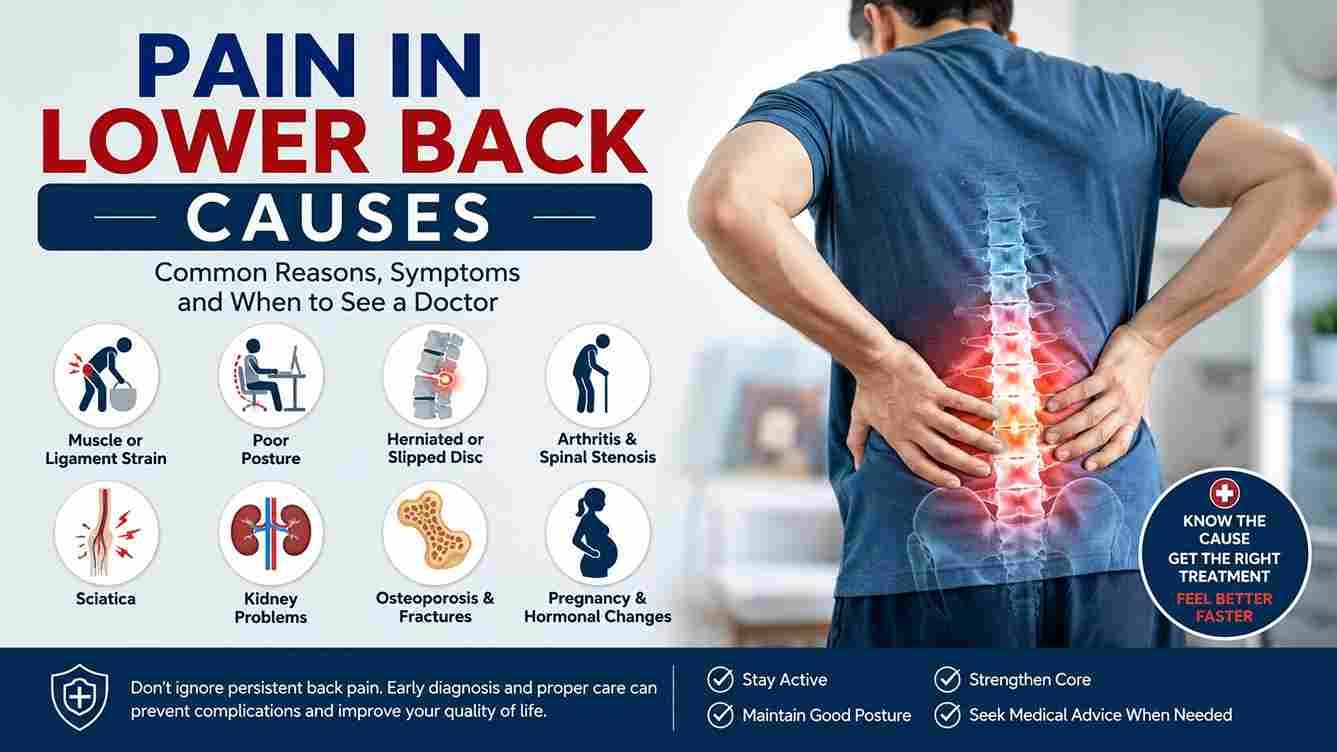
Pain in Lower Back Causes: Common Reasons, Symptoms, and When to See a Doctor
Lower back pain is one of the most common health complaints worldwide. It can affect people of all ages, from office workers who sit for long hours to athletes and older adults. In many cases, the pain goes away within a few weeks with rest and self-care. However, persistent or severe pain may indicate an underlying medical condition that requires professional evaluation.
Understanding the causes of lower back pain can help you recognize warning signs, seek appropriate treatment, and take steps to prevent future episodes.
According to the World Health Organization (WHO), low back pain is one of the leading causes of disability worldwide.
Understanding Pain in Lower Back Causes
The lower back, also called the lumbar spine, supports most of your body’s weight and allows movement such as bending, twisting, and lifting. It consists of vertebrae, discs, muscles, ligaments, nerves, and joints. Pain can develop when any of these structures become injured, inflamed, or diseased.
Lower back pain may be:
- Acute (lasting less than 6 weeks)
- Subacute (lasting 6–12 weeks)
- Chronic (lasting more than 12 weeks)
The pain can range from mild discomfort to severe, disabling pain that interferes with daily activities.
Most Common Causes of Lower Back Pain
Muscle or Ligament Strain
Muscle strains are among the leading causes of lower back pain. They often occur after:
- Heavy lifting
- Sudden awkward movements
- Sports injuries
- Poor posture
- Overuse
Symptoms include:
- Muscle stiffness
- Pain during movement
- Muscle spasms
- Limited flexibility
Most strains improve within a few weeks with proper rest and conservative treatment.
Poor Posture
Sitting incorrectly for long periods places excessive stress on the lumbar spine.
Common posture-related habits include:
- Slouching at a desk
- Leaning forward while using a phone
- Poor ergonomic workstation setup
- Standing unevenly for long periods
Improving posture and taking regular movement breaks can significantly reduce discomfort.
Herniated or Slipped Disc
The spinal discs act as cushions between the vertebrae. When one bulges or ruptures, it can press against nearby nerves.
Symptoms may include:
- Sharp lower back pain
- Pain radiating down one leg
- Numbness
- Tingling sensations
- Muscle weakness
This condition is commonly associated with sciatica.
Degenerative Disc Disease
As people age, spinal discs naturally lose water content and flexibility.
This can cause:
- Chronic lower back pain
- Morning stiffness
- Pain after prolonged sitting
- Reduced mobility
Although age-related, lifestyle factors such as smoking and obesity can accelerate disc degeneration.
Arthritis
Osteoarthritis can affect the joints in the spine.
Symptoms include:
- Persistent aching pain
- Joint stiffness
- Reduced range of motion
- Pain that worsens after inactivity
In some individuals, arthritis can narrow the spinal canal, leading to spinal stenosis.
Sciatica
Sciatica occurs when the sciatic nerve becomes compressed or irritated.
Pain usually:
- Starts in the lower back
- Travels through the buttock
- Extends down the leg
- May reach the foot
Many patients describe it as burning, electric, or shooting pain.
Spinal Stenosis
Spinal stenosis is the narrowing of spaces within the spine, placing pressure on nerves.
It commonly affects older adults and may cause:
- Lower back pain
- Leg numbness
- Weakness
- Difficulty walking
- Pain relieved by sitting or leaning forward
Kidney Problems
Not all lower back pain originates from the spine.
Kidney-related causes include:
- Kidney stones
- Kidney infections
Pain is often:
- Felt on one side
- Deep and constant
- Accompanied by fever
- Associated with painful urination
- Sometimes accompanied by blood in the urine
These conditions require prompt medical attention.
Osteoporosis
Osteoporosis weakens bones, making spinal fractures more likely.
Risk factors include:
- Older age
- Menopause
- Long-term steroid use
- Low calcium intake
Compression fractures can cause sudden severe back pain.
Pregnancy
Pregnancy places additional stress on the lower back because of:
- Weight gain
- Hormonal changes
- Altered posture
- Weakened abdominal muscles
Many pregnant women experience lower back discomfort, particularly during the second and third trimesters.
Less Common but Serious Causes
Although uncommon, lower back pain may result from serious medical conditions, including:
- Spinal infections
- Tumors affecting the spine
- Inflammatory diseases such as ankylosing spondylitis
- Cauda equina syndrome (a medical emergency)
- Fractures following trauma
Immediate medical care is essential if these conditions are suspected.
Risk Factors
Several factors increase the likelihood of developing lower back pain.
Age
The risk increases after age 30 due to natural wear and tear.
Sedentary Lifestyle
Weak core muscles provide less support for the spine.
Excess Weight
Extra body weight places greater stress on spinal structures.
Occupation
Jobs involving repetitive lifting, bending, or prolonged sitting increase risk.
Smoking
Smoking reduces blood flow to spinal discs and slows healing.
Stress
Emotional stress may contribute to muscle tension and chronic pain.
Symptoms That May Accompany Lower Back Pain
Depending on the underlying cause, symptoms may include:
- Muscle tightness
- Pain radiating into the legs
- Tingling
- Numbness
- Weakness
- Difficulty standing upright
- Reduced flexibility
- Pain while walking
- Pain after prolonged sitting
Warning Signs That Require Immediate Medical Care
Seek urgent medical attention if lower back pain is accompanied by:
- Loss of bladder or bowel control
- Severe weakness in the legs
- Numbness around the groin or buttocks
- High fever with back pain
- Unexplained weight loss
- Pain following a serious accident
- Persistent pain that does not improve after several weeks
- Severe nighttime pain
These symptoms may indicate a serious medical condition.
How Doctors Diagnose Lower Back Pain
Diagnosis usually begins with:
- Medical history
- Physical examination
- Assessment of posture and movement
If necessary, additional tests may include:
- X-rays
- MRI scans
- CT scans
- Blood tests
- Nerve conduction studies
Imaging is generally reserved for cases involving persistent pain, trauma, or neurological symptoms.
Treatment Options
Treatment depends on the underlying cause and severity.
Home Care
Many mild cases improve with:
- Gentle activity
- Short periods of rest
- Ice during the first 48 hours
- Heat therapy afterward
- Stretching exercises
Medications
Doctors may recommend:
- Acetaminophen
- Nonsteroidal anti-inflammatory drugs (NSAIDs)
- Muscle relaxants
- Prescription medications for severe pain when appropriate
Medication should be used according to healthcare advice.
Physical Therapy
Physical therapists help strengthen:
- Core muscles
- Back muscles
- Hip muscles
They also teach posture correction and safe movement techniques.
Lifestyle Changes
Healthy habits can reduce future episodes:
- Maintain a healthy weight
- Exercise regularly
- Improve workplace ergonomics
- Lift objects correctly
- Avoid smoking
Advanced Treatments
For persistent or severe cases, doctors may consider:
- Corticosteroid injections
- Nerve blocks
- Radiofrequency procedures
- Surgery for selected conditions such as severe herniated discs or spinal stenosis
Tips to Prevent Lower Back Pain
Prevention focuses on protecting the spine during everyday activities.
Helpful habits include:
- Exercise regularly
- Strengthen core muscles
- Stretch daily
- Maintain good posture
- Sleep on a supportive mattress
- Lift with your legs instead of your back
- Take breaks from prolonged sitting
- Wear supportive footwear
- Maintain a healthy body weight
Frequently Asked Questions
What is the most common cause of lower back pain?
Muscle or ligament strain from lifting, sudden movement, or poor posture is the most common cause.
Can stress cause lower back pain?
Yes. Stress can increase muscle tension, leading to discomfort and worsening existing back pain.
When should I worry about lower back pain?
You should seek medical evaluation if the pain is severe, lasts longer than several weeks, spreads into the legs with weakness, or is associated with fever, bladder or bowel changes, or numbness in the groin area.
Is walking good for lower back pain?
For many people with uncomplicated lower back pain, gentle walking helps maintain mobility and supports recovery. However, if walking significantly worsens pain or neurological symptoms, consult a healthcare professional.
Can poor posture alone cause back pain?
Yes. Long periods of poor posture can strain muscles, ligaments, and spinal joints, leading to lower back discomfort over time.
Conclusion
Lower back pain has many possible causes, ranging from simple muscle strains to conditions affecting the spine, nerves, kidneys, or bones. Most cases improve with conservative care, healthy lifestyle habits, and proper posture. However, persistent pain or symptoms such as numbness, weakness, fever, or loss of bladder or bowel control should never be ignored.
If your lower back pain is severe, recurring, or interfering with daily life, consult a qualified healthcare professional for an accurate diagnosis and personalized treatment pl