
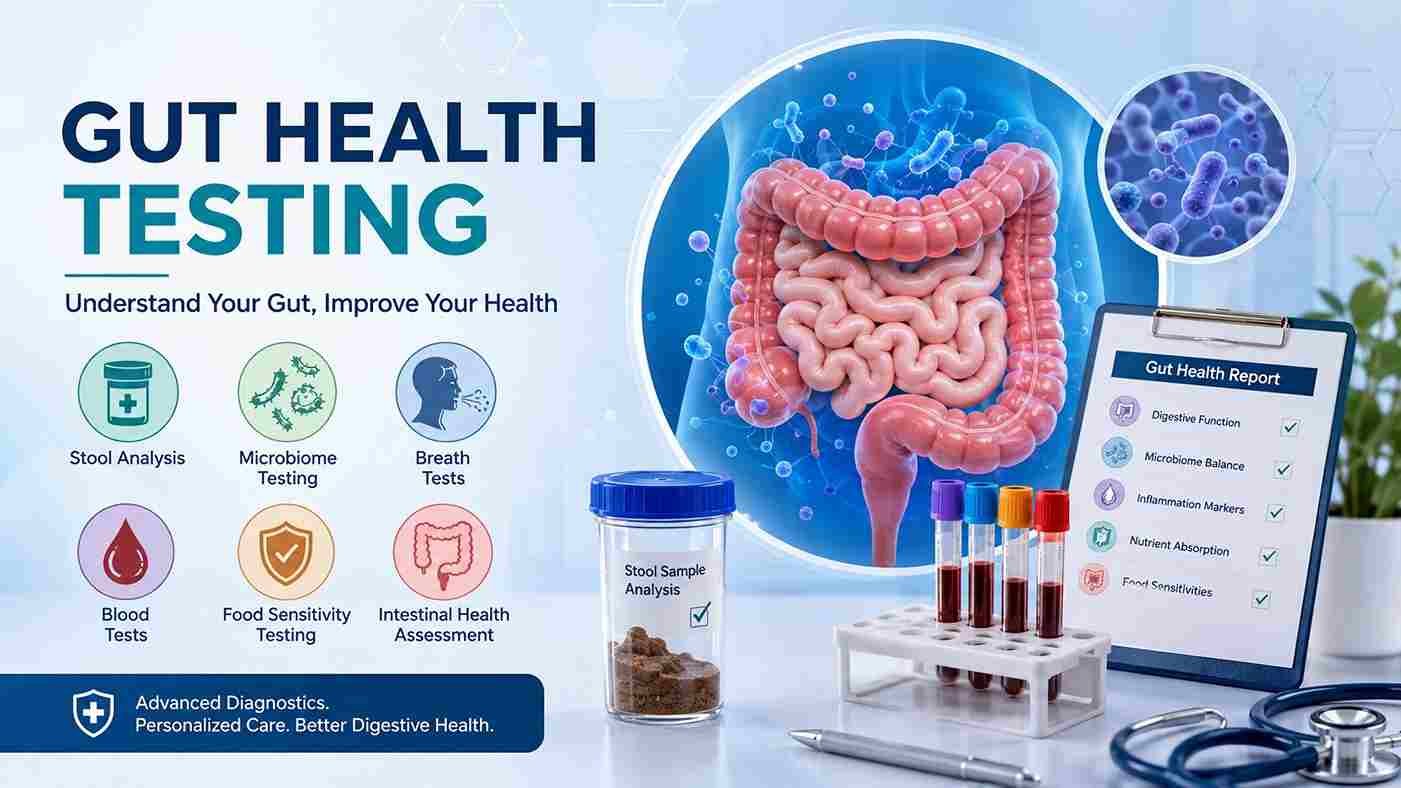
Gut Health Testing: Understanding Your Digestive Health with Advanced Diagnostics
Your digestive system does much more than process the food you eat. It plays a vital role in nutrient absorption, immune function, metabolism, and even mental well-being. At the center of this system is the gut microbiome—a complex community of trillions of microorganisms that help maintain digestive balance and overall health.
When the digestive system is not functioning properly, it can affect many aspects of daily life. Persistent bloating, abdominal discomfort, irregular bowel habits, unexplained fatigue, and recurring digestive issues may indicate an underlying imbalance that requires medical evaluation. This is where gut health testing becomes valuable.
Modern diagnostic technologies allow healthcare providers to assess different aspects of digestive health, including gut bacteria, inflammation, infections, nutrient absorption, and digestive function. These tests help identify the root cause of symptoms rather than simply treating them, enabling more personalized and effective treatment plans.
Whether you’re experiencing ongoing digestive concerns or looking to better understand your gastrointestinal health, comprehensive gut health testing can provide important insights that support long-term wellness.
What Is Gut Health?
Gut health refers to the proper functioning of the gastrointestinal (GI) tract and the balance of microorganisms that live within it. A healthy digestive system efficiently breaks down food, absorbs nutrients, supports immune defenses, and maintains a balanced gut microbiome.
The digestive tract includes several organs that work together, including:
- Mouth
- Esophagus
- Stomach
- Small intestine
- Large intestine (colon)
- Rectum
Within these organs lives the gut microbiome, which consists of:
- Beneficial bacteria
- Viruses
- Fungi
- Other microorganisms
Although the term “bacteria” often carries a negative meaning, many gut bacteria are essential for maintaining good health. They help digest certain foods, produce vitamins, protect against harmful microbes, and communicate with the immune system.
When this microbial balance is disrupted—a condition known as dysbiosis—various digestive and systemic health problems may develop.
Why Gut Health Matters
A healthy gut influences much more than digestion. Research continues to demonstrate connections between gut health and numerous body systems.
Supports Digestion
Healthy gut bacteria assist in breaking down dietary fiber and complex carbohydrates, allowing the body to absorb nutrients more efficiently.
Strengthens the Immune System
Approximately 70% of the body’s immune cells are associated with the digestive tract. A healthy gut helps regulate immune responses and protect against harmful pathogens.
Enhances Nutrient Absorption
Proper gut function ensures efficient absorption of important nutrients, including:
- Iron
- Calcium
- Magnesium
- Vitamin B12
- Folate
- Fat-soluble vitamins
Poor gut health may contribute to nutritional deficiencies despite consuming a balanced diet.
Supports Mental Well-Being
Researchers have identified a strong connection between the digestive system and the brain, often referred to as the gut-brain axis. The gut microbiome produces neurotransmitters and communicates with the nervous system, potentially influencing mood, stress, and cognitive function.
Helps Reduce Inflammation
A balanced gut microbiome helps regulate inflammatory responses throughout the body. Chronic gut inflammation has been associated with several digestive and systemic conditions.
Signs You May Need Gut Health Testing
Occasional digestive discomfort is common. However, persistent or recurring symptoms should be evaluated by a healthcare professional.
Gut health testing may be recommended if you experience:
- Frequent bloating
- Chronic constipation
- Persistent diarrhea
- Alternating constipation and diarrhea
- Excessive gas
- Abdominal pain or cramping
- Acid reflux
- Food intolerances
- Unexplained weight loss
- Fatigue
- Nutrient deficiencies
- Persistent nausea
- Blood in the stool
- Changes in bowel habits lasting several weeks
In some cases, digestive symptoms may indicate underlying gastrointestinal disorders that require prompt diagnosis and treatment.
Who Should Consider Gut Health Testing?
Healthcare providers may recommend gut health testing for individuals with persistent digestive symptoms or those at increased risk of gastrointestinal conditions.
Testing may be appropriate for:
Individuals with Chronic Digestive Symptoms
People experiencing ongoing digestive discomfort may benefit from diagnostic evaluation to determine the underlying cause.
Patients with Irritable Bowel Syndrome (IBS)
Individuals diagnosed with or suspected of having IBS may undergo testing to exclude other gastrointestinal conditions and identify contributing factors.
People with Inflammatory Bowel Disease (IBD)
Patients with Crohn’s disease or ulcerative colitis often require laboratory testing to monitor inflammation and disease activity.
Individuals with Food Intolerances
Digestive symptoms after consuming certain foods may warrant further investigation to determine whether intolerances or other gastrointestinal conditions are present.
People with Frequent Antibiotic Use
Repeated antibiotic treatment may alter the gut microbiome, potentially affecting digestive health.
Individuals with Family History of Digestive Disorders
Those with close relatives affected by colorectal cancer, inflammatory bowel disease, or other gastrointestinal disorders may benefit from medical evaluation based on individual risk factors.
Common Digestive Conditions Linked to Poor Gut Health
Gut health testing may help healthcare providers investigate or monitor several digestive conditions.
Irritable Bowel Syndrome (IBS)
IBS is a functional gastrointestinal disorder characterized by abdominal pain, bloating, constipation, diarrhea, or a combination of both. Testing helps rule out other conditions with similar symptoms.
Inflammatory Bowel Disease (IBD)
Crohn’s disease and ulcerative colitis cause chronic inflammation of the digestive tract and often require laboratory testing alongside imaging and endoscopic evaluation.
Small Intestinal Bacterial Overgrowth (SIBO)
SIBO occurs when excessive bacteria grow within the small intestine, potentially causing bloating, abdominal discomfort, diarrhea, and nutrient malabsorption.
Celiac Disease
Celiac disease is an autoimmune condition triggered by gluten consumption that damages the small intestine. Blood tests and biopsy are typically used for diagnosis.
Food Intolerances
Certain foods may trigger digestive symptoms without involving an immune-mediated allergy. Appropriate testing may help identify contributing factors when clinically indicated.
Gastrointestinal Infections
Bacterial, viral, or parasitic infections may cause acute or chronic digestive symptoms and often require stool testing for diagnosis.
Colorectal Disorders
Persistent digestive symptoms may occasionally indicate colorectal polyps, colorectal cancer, or other structural conditions requiring further evaluation through colonoscopy or imaging.
Types of Gut Health Tests, How They Work & Understanding Your Results
Accurately diagnosing digestive concerns begins with selecting the right diagnostic tests. Since no single test can evaluate every aspect of digestive health, healthcare providers choose investigations based on a patient’s symptoms, medical history, family history, and physical examination.
Gut health testing may involve laboratory analysis, imaging, endoscopic procedures, or a combination of these approaches. The goal is to identify infections, inflammation, nutritional deficiencies, digestive disorders, or structural abnormalities that may be contributing to symptoms.
Types of Gut Health Tests
Different tests provide different insights into digestive health. Your gastroenterologist may recommend one or several investigations depending on your condition.
Stool Analysis
A stool analysis is one of the most commonly used tests to evaluate gastrointestinal health. It provides valuable information about digestive function, infections, inflammation, and the overall condition of the intestines.
A stool sample may be examined for:
- Bacterial infections
- Viral infections
- Parasites
- Blood in the stool
- Digestive enzyme activity
- Fat malabsorption
- Markers of intestinal inflammation
- Signs of gastrointestinal bleeding
Stool testing can help diagnose conditions such as infectious diarrhea, inflammatory bowel disease (IBD), and certain malabsorption disorders.
Gut Microbiome Testing
The gut microbiome consists of trillions of microorganisms that play a crucial role in digestion, metabolism, immune function, and overall health.
Microbiome testing analyzes the composition of bacteria and other microorganisms in the digestive tract. It aims to identify imbalances that may affect gut function.
Research into the gut microbiome is rapidly evolving. While microbiome analysis has become increasingly available, its clinical usefulness varies depending on the individual’s symptoms and medical condition. Results should always be interpreted by a qualified healthcare professional within the context of an overall medical assessment.
Breath Tests
Breath testing is a non-invasive diagnostic tool commonly used to identify certain digestive disorders.
During the test, patients consume a specific sugar solution, and breath samples are collected over several hours to measure gases such as hydrogen and methane.
Breath tests may help diagnose:
- Small Intestinal Bacterial Overgrowth (SIBO)
- Lactose intolerance
- Fructose malabsorption
These tests can assist healthcare providers in determining whether abnormal bacterial fermentation is contributing to digestive symptoms.
Blood Tests
Blood tests provide important information about overall health and can help identify conditions affecting the digestive system.
Common blood investigations include:
- Complete blood count (CBC)
- Iron studies
- Vitamin B12 levels
- Folate levels
- Vitamin D levels
- Inflammatory markers
- Liver function tests
- Kidney function tests
- Electrolytes
- Celiac disease antibodies
Blood tests may also detect anemia, chronic inflammation, nutritional deficiencies, or autoimmune conditions associated with gastrointestinal disease.
Food Allergy and Food Intolerance Evaluation
Digestive symptoms after eating certain foods may have multiple causes.
Food Allergy Testing
Food allergies involve an immune system response and are typically evaluated using medical history, skin prick testing, blood tests for specific IgE antibodies, or supervised oral food challenges when appropriate.
Food Intolerance Assessment
Food intolerances differ from food allergies because they do not involve the immune system. Diagnosis often relies on:
- Detailed dietary history
- Symptom tracking
- Elimination diets supervised by a healthcare professional
- Breath testing for lactose or fructose intolerance, when indicated
It’s important to note that many commercially marketed food sensitivity tests lack strong scientific evidence for diagnosing food intolerances. Medical guidance is recommended before making significant dietary changes based on such tests.
Fecal Calprotectin Test
Fecal calprotectin is a protein released during intestinal inflammation.
Measuring calprotectin levels in stool can help distinguish inflammatory bowel disease (IBD) from functional conditions such as irritable bowel syndrome (IBS).
Healthcare providers often use this test to:
- Assess intestinal inflammation
- Monitor disease activity in IBD
- Determine whether further investigations, such as colonoscopy, may be needed
Fecal Occult Blood Test (FOBT) and Fecal Immunochemical Test (FIT)
These stool-based tests detect hidden (occult) blood that is not visible to the naked eye.
They may be used for:
- Colorectal cancer screening
- Evaluation of unexplained anemia
- Investigation of gastrointestinal bleeding
A positive result does not necessarily indicate cancer but usually requires additional evaluation, such as a colonoscopy.
Helicobacter pylori (H. pylori) Testing
Helicobacter pylori is a bacterium that can infect the stomach lining and is associated with conditions such as gastritis, peptic ulcers, and, in some cases, stomach cancer.
Testing options include:
- Urea breath test
- Stool antigen test
- Blood antibody test (less commonly used for active infection)
- Endoscopic biopsy during gastroscopy
Early diagnosis and treatment can help prevent complications.
Endoscopy and Colonoscopy
When symptoms suggest structural abnormalities or persistent gastrointestinal disease, your gastroenterologist may recommend endoscopic procedures.
Upper Endoscopy (Gastroscopy)
This procedure uses a thin, flexible tube with a camera to examine the:
- Esophagus
- Stomach
- Upper small intestine
It helps diagnose:
- Acid reflux complications
- Gastritis
- Peptic ulcers
- Celiac disease
- Upper gastrointestinal bleeding
Colonoscopy
A colonoscopy examines the large intestine and rectum.
It is commonly used to investigate:
- Persistent diarrhea
- Rectal bleeding
- Unexplained abdominal pain
- Inflammatory bowel disease
- Colorectal polyps
- Colorectal cancer
During the procedure, tissue samples (biopsies) may be taken for laboratory analysis if needed.
How Gut Health Testing Works
Although each test is different, the evaluation process generally follows several steps.
Initial Medical Consultation
The process begins with a detailed discussion of:
- Current symptoms
- Medical history
- Family history
- Medications
- Diet and lifestyle
- Previous digestive conditions
This information helps determine which investigations are most appropriate.
Physical Examination
Your physician may examine the abdomen for:
- Tenderness
- Swelling
- Abnormal bowel sounds
- Signs of nutritional deficiencies
- Other physical findings related to digestive disorders
Selecting the Appropriate Tests
Not every patient requires extensive testing.
Healthcare providers recommend investigations based on individual symptoms, age, risk factors, and clinical findings to avoid unnecessary procedures while ensuring an accurate diagnosis.
Preparing for Gut Health Testing
Preparation depends on the type of test being performed.
General instructions may include:
- Fasting for several hours before certain blood tests or breath tests
- Temporarily avoiding specific medications, if advised by your healthcare provider
- Following dietary restrictions before breath tests
- Collecting stool samples according to laboratory instructions
- Completing bowel preparation before a colonoscopy
Always follow the instructions provided by your healthcare team, as proper preparation helps improve the accuracy of test results.
Understanding Your Test Results
Receiving your results is only the first step. Proper interpretation requires consideration of your symptoms, medical history, physical examination, and, in some cases, additional investigations.
Your healthcare provider will explain:
- Whether your results are normal or abnormal
- Possible causes of any abnormalities
- Whether further testing is needed
- Treatment options or lifestyle recommendations
- Follow-up plans and monitoring, if necessary
Because digestive symptoms can have many different causes, a comprehensive medical assessment is essential for developing an effective and personalized care plan.
Treatment After Gut Health Testing
Once your gut health test results are available, your healthcare provider will develop a personalized treatment plan based on the underlying cause of your symptoms. Since digestive disorders can vary significantly from person to person, treatment focuses on addressing the specific condition rather than simply relieving symptoms.
Your care plan may include dietary changes, medications, lifestyle modifications, nutritional support, or additional diagnostic procedures if necessary.
Dietary Recommendations
Diet is one of the most important factors affecting digestive health. Depending on your diagnosis, your physician or registered dietitian may recommend:
- Increasing dietary fiber gradually
- Eating more fruits and vegetables
- Choosing whole grains
- Including fermented foods when appropriate
- Limiting ultra-processed foods
- Staying well hydrated
- Identifying and avoiding trigger foods
For individuals with medically diagnosed food intolerances or gastrointestinal disorders, dietary recommendations should always be personalized.
Medications
Some digestive conditions require medication to reduce symptoms or treat the underlying disease.
Depending on your diagnosis, treatment may include medications to:
- Reduce stomach acid
- Treat bacterial infections
- Control intestinal inflammation
- Manage diarrhea or constipation
- Improve digestive function
- Treat inflammatory bowel disease
Medications should only be taken under the supervision of a qualified healthcare professional.
Probiotics and Prebiotics
Probiotics are live microorganisms that may help support a healthy balance of gut bacteria in certain situations.
Prebiotics are types of dietary fiber that nourish beneficial gut bacteria.
While probiotics may be beneficial for some individuals, they are not appropriate for every digestive condition. Your healthcare provider can advise whether probiotic supplements or probiotic-rich foods are suitable for your specific needs.
Managing Underlying Medical Conditions
Gut health testing may identify conditions that require ongoing medical care, including:
- Irritable bowel syndrome (IBS)
- Inflammatory bowel disease (IBD)
- Celiac disease
- Gastrointestinal infections
- Small intestinal bacterial overgrowth (SIBO)
- Peptic ulcer disease
Early diagnosis and appropriate treatment can help reduce complications and improve quality of life.
How to Improve Gut Health Naturally
Even if testing does not reveal a serious medical condition, healthy lifestyle habits can support digestive wellness.
Eat a Balanced Diet
A nutritious eating pattern supports both digestion and the gut microbiome.
Consider including:
- Fresh vegetables
- Fruits
- Legumes
- Whole grains
- Lean protein
- Healthy fats
- Foods rich in natural fiber
A varied diet provides nutrients that help maintain a healthy digestive system.
Stay Hydrated
Water supports digestion, nutrient absorption, and regular bowel movements.
Daily fluid needs vary depending on age, activity level, climate, and overall health.
Exercise Regularly
Regular physical activity supports healthy digestion and may help reduce constipation while promoting overall well-being.
Adults should aim for regular exercise according to their healthcare provider’s recommendations and overall fitness level.
Manage Stress
The digestive system and brain communicate through the gut-brain axis. Chronic stress may worsen digestive symptoms in some individuals.
Stress management techniques may include:
- Meditation
- Deep breathing exercises
- Yoga
- Regular exercise
- Adequate sleep
- Mindfulness practices
Get Enough Sleep
Poor sleep has been associated with changes in gut health and overall well-being.
Most adults benefit from seven to nine hours of quality sleep each night.
Avoid Smoking and Limit Alcohol
Smoking and excessive alcohol consumption can negatively affect digestive health and increase the risk of several gastrointestinal disorders.
When Should You See a Gastroenterologist?
Occasional digestive discomfort is common, but persistent symptoms should not be ignored.
Consult a gastroenterologist if you experience:
- Persistent abdominal pain
- Frequent bloating
- Chronic diarrhea
- Ongoing constipation
- Blood in the stool
- Unexplained weight loss
- Difficulty swallowing
- Persistent acid reflux
- Recurrent vomiting
- Family history of colorectal cancer or inflammatory bowel disease
Prompt medical evaluation can help identify the underlying cause and allow treatment to begin as early as possible.
Gut Health Testing at American Hospital Dubai
American Hospital Dubai offers comprehensive gastroenterology services supported by advanced diagnostic technology and experienced specialists.
Depending on your symptoms and medical history, your physician may recommend appropriate investigations such as:
- Blood tests
- Stool analysis
- Breath testing
- Endoscopy
- Colonoscopy
- Imaging studies
- Specialized gastrointestinal evaluations
Following diagnosis, your care team develops an individualized treatment plan focused on improving digestive health and overall wellness.
Frequently Asked Questions
What is gut health testing?
Gut health testing includes medical investigations that evaluate digestive function, detect infections, identify inflammation, assess nutrient absorption, and help diagnose gastrointestinal disorders.
Is gut microbiome testing the same as gut health testing?
No. Gut microbiome testing evaluates the microorganisms living in the digestive tract, while gut health testing is a broader term that includes laboratory tests, imaging, endoscopy, colonoscopy, blood tests, and other diagnostic procedures.
Do I need gut health testing for occasional bloating?
Occasional bloating is common and often resolves with dietary or lifestyle changes. However, persistent, severe, or recurrent bloating should be evaluated by a healthcare professional.
How long does it take to receive results?
The turnaround time varies depending on the type of test. Some blood tests may be available within a day, while specialized laboratory analyses can take several days.
Are gut health tests painful?
Most laboratory tests, stool tests, and breath tests are minimally invasive. Procedures such as endoscopy and colonoscopy are typically performed with sedation to improve patient comfort.
Can gut health testing detect colon cancer?
Some stool tests can identify hidden blood that may indicate the need for further evaluation. However, colonoscopy remains the gold standard for diagnosing colorectal cancer and detecting precancerous polyps.
Conclusion
Gut health plays a central role in digestion, immunity, nutrient absorption, and overall well-being. When digestive symptoms persist or interfere with daily life, comprehensive gut health testing can help identify the underlying cause and guide appropriate treatment.
Advances in diagnostic technology allow healthcare providers to evaluate digestive disorders with greater accuracy, enabling personalized care based on each patient’s unique needs. Whether symptoms are caused by infection, inflammation, food intolerance, or another gastrointestinal condition, early assessment can support more effective treatment and improved long-term health.
If you are experiencing ongoing digestive concerns, consulting a qualified gastroenterologist can help determine whether gut health testing is appropriate and ensure you receive evidence-based care tailored to your condition.