Best Apps for Mental Health: A Complete Guide to Mindfulness, Stress Relief, and Emotional Well-Being
Mental health is an essential part of overall well-being, and taking care of it is just as important as maintaining physical health. In today’s digital world, smartphones can be valuable tools for building healthy habits, managing everyday stress, improving sleep, practising mindfulness, and tracking emotions. While no mobile application can replace professional medical care, many mental health apps offer practical features that may support emotional well-being and encourage consistent self-care.
According to the World Health Organization (WHO), mental health is more than the absence of mental illness. It is a state of well-being that enables people to cope with life’s challenges, work productively, build healthy relationships, and contribute to their communities. Simple daily practices such as relaxation exercises, mindfulness, regular physical activity, and healthy sleep habits can play an important role in supporting mental well-being.
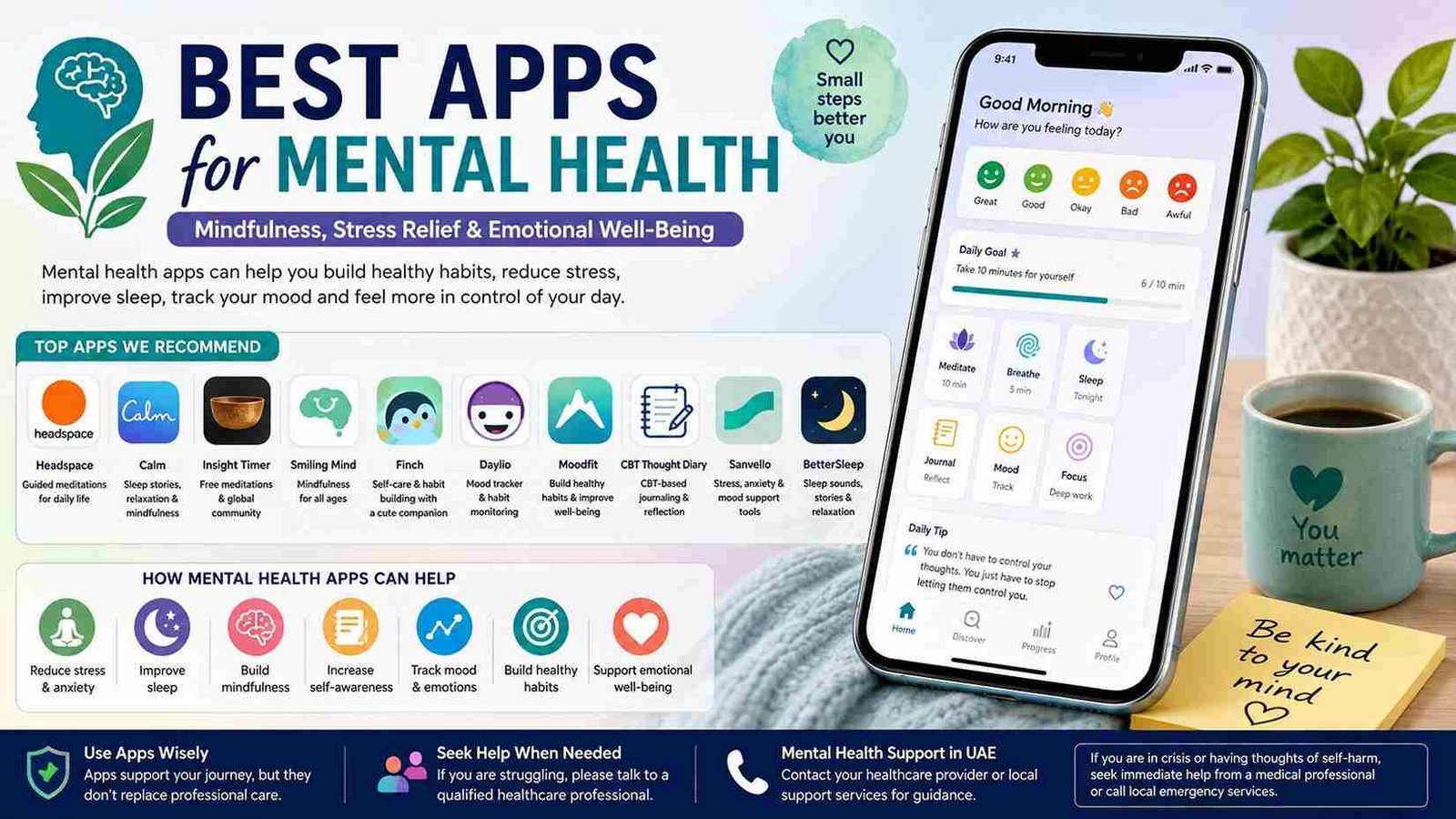
Whether you’re looking for guided meditation, breathing exercises, mood tracking, sleep sounds, journaling, or stress management tools, there are many high-quality apps available for Android and iPhone users. Some are completely free, while others offer optional premium subscriptions with additional features.
This guide explores the best apps for mental health, explains how they work, discusses their advantages and limitations, and provides practical advice for choosing an app that fits your needs.
Medical Disclaimer: This article is for educational purposes only. Mental health apps are designed to support well-being and healthy habits, but they are not a substitute for professional medical advice, diagnosis, or treatment. If you are experiencing persistent emotional distress or symptoms that interfere with daily life, consult a qualified healthcare professional.
- World Health Organization (WHO) – Mental Health
https://www.who.int/health-topics/mental-health- National Institute of Mental Health (NIMH)
https://www.nimh.nih.gov/- Centers for Disease Control and Prevention (CDC) – Mental Health
https://www.cdc.gov/mentalhealth/
Quick Facts About Mental Health Apps
| Information | Details |
|---|---|
| Topic | Mental Health Apps |
| Suitable For | Adults and older teenagers (depending on the app) |
| Main Features | Meditation, breathing exercises, mood tracking, journaling, sleep support |
| Cost | Free or subscription-based |
| Offline Access | Available in some apps |
| Best For | Stress management, mindfulness, healthy routines |
| Medical Use | Supports well-being but does not replace professional care |
Why Use a Mental Health App?
Life can be busy and stressful, making it difficult to prioritise emotional well-being. Mental health apps provide convenient tools that can be accessed anytime, whether you’re at home, at work, or travelling.
Many apps are designed to help users:
- Practise mindfulness
- Learn breathing techniques
- Reduce everyday stress
- Build healthy daily routines
- Track moods and emotions
- Improve sleep habits
- Develop greater self-awareness
- Create moments of relaxation during busy days
Because smartphones are already part of everyday life, using an app can make self-care more accessible and consistent.
What Makes a Good Mental Health App?
Not every app offers the same features or level of quality. Before downloading an app, consider several important factors.
A well-designed mental health app should:
- Be easy to use.
- Provide clear instructions.
- Protect user privacy.
- Offer evidence-informed features.
- Receive regular updates.
- Allow users to personalise reminders and goals.
Reading recent user reviews and understanding the app’s privacy policy can also help you make an informed decision.
Best Apps for Mental Health
1. Headspace
Headspace is one of the most popular mindfulness and meditation apps worldwide. It offers guided meditation sessions, breathing exercises, sleep content, focus music, and stress-management programmes.
Best for:
- Beginners
- Guided meditation
- Stress management
- Building mindfulness habits
Key Features
- Daily guided meditations
- Breathing exercises
- Sleep stories
- Focus music
- Mindfulness courses
- Progress tracking
Free vs. Paid
Headspace provides limited free content, while a subscription unlocks its full library of meditation sessions, sleep tools, and structured programmes.
Things to Consider
The app is designed to encourage regular mindfulness practice but should not be viewed as a replacement for professional mental healthcare.
2. Calm
Calm is well known for helping users relax through meditation, calming sounds, sleep stories, breathing exercises, and gentle stretching sessions.
It is particularly popular among people who want support for building healthy bedtime routines.
Best for
- Sleep support
- Relaxation
- Meditation
- Stress reduction
Key Features
- Guided meditation
- Sleep stories
- Relaxing nature sounds
- Breathing exercises
- Daily mindfulness sessions
Free vs. Paid
A selection of features is available free of charge, while additional content requires a premium subscription.
3. Insight Timer
Insight Timer has one of the largest free libraries of guided meditations available.
The platform includes contributions from mindfulness teachers, psychologists, yoga instructors, and wellness experts from around the world.
Best for
- Free meditation content
- Mindfulness practice
- Relaxation
- Sleep
Key Features
- Thousands of guided meditations
- Music for relaxation
- Sleep sessions
- Meditation timer
- Community groups
Because much of its content is free, Insight Timer is a popular choice for people exploring meditation without committing to a subscription.
4. Smiling Mind
Smiling Mind is a not-for-profit mindfulness programme developed with educational and well-being goals in mind.
Its guided activities are designed for different age groups and include mindfulness exercises suitable for children, teenagers, and adults.
Best for
- Families
- Students
- Beginners
- Daily mindfulness
Key Features
- Age-specific programmes
- Guided breathing
- Mindfulness sessions
- Educational resources
Many features are available without charge, making it an accessible option for users seeking structured mindfulness exercises.
5. Finch
Finch takes a unique approach by combining self-care activities with a virtual companion that grows as you complete healthy habits.
The app encourages users to build routines through small, achievable daily goals.
Best for
- Habit building
- Self-care motivation
- Daily wellness check-ins
Key Features
- Mood check-ins
- Goal setting
- Journaling prompts
- Breathing exercises
- Self-care reminders
Its friendly design may appeal to users who enjoy gamified motivation and routine tracking.
6. Daylio
Daylio is a popular mood-tracking app that allows users to record their emotions, daily activities, and habits without writing lengthy journal entries. By logging your mood regularly, you can identify patterns and better understand how your daily routine, sleep, exercise, or social activities may affect your emotional well-being.
Best for
- Mood tracking
- Habit monitoring
- Personal journaling
- Self-awareness
Key Features
- Daily mood check-ins
- Activity tracking
- Habit reminders
- Customisable entries
- Progress charts and statistics
- Backup options
Free vs. Paid
The free version offers core mood-tracking features, while premium plans include additional customisation, advanced statistics, and extra tools.
Things to Consider
Mood tracking can improve self-awareness, but it should not be used to diagnose mental health conditions.
7. Moodfit
Moodfit focuses on building healthy habits that support emotional well-being. It combines mood tracking with wellness activities, goal setting, and educational resources.
Best for
- Building healthy routines
- Mood monitoring
- Stress management
- Personal wellness goals
Key Features
- Mood journal
- Goal tracking
- Gratitude exercises
- Mindfulness activities
- Sleep tracking
- Educational resources
Moodfit encourages users to develop healthier daily habits through consistent self-monitoring and positive lifestyle changes.
8. CBT Thought Diary
CBT Thought Diary is based on principles of Cognitive Behavioural Therapy (CBT), a widely used psychological approach. The app helps users record situations, thoughts, emotions, and alternative ways of thinking.
Best for
- Reflective journaling
- Recognising thought patterns
- Practising CBT-based exercises
Key Features
- Thought records
- Mood tracking
- Guided reflection
- Journaling
- CBT-inspired exercises
Important Note
Although inspired by Cognitive Behavioural Therapy techniques, using the app is not the same as receiving therapy from a qualified mental health professional.
9. Sanvello
Sanvello combines self-care tools with mood tracking, guided activities, and educational resources designed to support everyday mental well-being.
Depending on your location, available features may vary.
Best for
- Stress management
- Mood tracking
- Guided self-care
Key Features
- Guided activities
- Mood journal
- Relaxation exercises
- Goal setting
- Daily check-ins
Before downloading, check whether the app and its services are available in your region.
10. BetterSleep
Quality sleep plays an important role in emotional and physical health. BetterSleep focuses on helping users establish healthier bedtime routines.
Best for
- Sleep support
- Relaxation
- Bedtime routines
Key Features
- Sleep sounds
- White noise
- Guided relaxation
- Bedtime stories
- Sleep tracking
- Breathing exercises
Many users combine BetterSleep with mindfulness practices to improve their evening routine.
Benefits of Mental Health Apps
Mental health apps cannot replace professional healthcare, but they may support healthy habits and emotional well-being when used consistently.
Encourages Mindfulness
Many apps include guided meditation sessions that help users focus on the present moment and develop greater awareness of their thoughts and feelings.
Supports Stress Management
Breathing exercises, calming sounds, and relaxation techniques may help people manage everyday stress and feel more relaxed.
Improves Sleep Habits
Several apps provide bedtime routines, soothing audio, and sleep tracking features that may encourage healthier sleep patterns.
Builds Healthy Daily Habits
Daily reminders can encourage users to:
- Meditate
- Exercise
- Practise gratitude
- Drink enough water
- Take regular breaks
- Maintain a consistent sleep schedule
Small habits practiced regularly can contribute to long-term well-being.
Tracks Emotional Well-Being
Mood tracking allows users to notice changes over time and identify factors that may influence how they feel.
This information can also be useful when discussing concerns with a healthcare professional.
Increases Self-Awareness
Journaling and reflection tools encourage users to pause, recognise emotions, and develop healthier coping strategies.
How to Choose the Right Mental Health App
With so many options available, choosing the right app depends on your personal needs and preferences.
Identify Your Goal
Ask yourself what you hope to achieve.
For example:
- Reduce everyday stress
- Improve sleep
- Practise meditation
- Track moods
- Build healthier habits
- Learn breathing exercises
Selecting an app with features that match your goals makes it more likely that you’ll continue using it.
Look for an Easy-to-Use Interface
Simple navigation and clear instructions make it easier to build a regular self-care routine.
Read the Privacy Policy
Mental health apps often collect personal information.
Before creating an account:
- Review the privacy policy.
- Understand what information is collected.
- Check whether your data is shared with third parties.
- Adjust privacy settings where available.
Compare Free and Paid Features
Many apps offer useful free features, while premium subscriptions unlock additional content.
Try the free version first before deciding whether a paid plan meets your needs.
Check Scientific Credibility
Choose apps developed with input from qualified healthcare professionals, psychologists, researchers, or recognised organisations whenever possible.
Reliable information supports safer and more effective use.
Consider Language and Accessibility
If English is not your preferred language, look for apps that offer multilingual support or accessibility features such as adjustable text size, audio guidance, or subtitles.
When Apps Are Not Enough
Mental health apps can be useful tools for supporting mindfulness, stress management, relaxation, and healthy routines, but they have limitations. They should not replace assessment, diagnosis, or treatment from a qualified healthcare professional.
If you experience persistent emotional distress, severe anxiety, prolonged sadness, significant changes in sleep or appetite, difficulty carrying out everyday activities, or symptoms that continue to worsen, it is important to seek professional support. A licensed psychologist, psychiatrist, counsellor, or your primary healthcare provider can provide a comprehensive assessment and recommend appropriate care.
Similarly, if an app encourages self-reflection but your symptoms become more intense or interfere with your work, education, or relationships, professional guidance is the safest next step.
Mental Well-Being Tips Beyond Apps
While digital tools can support your wellness journey, combining them with healthy lifestyle habits often provides greater benefits.
Stay Physically Active
Regular exercise supports both physical and mental well-being. Activities such as walking, cycling, swimming, yoga, or strength training may help reduce everyday stress and improve mood.
Prioritise Quality Sleep
Aim for a consistent sleep schedule by:
- Going to bed and waking up at similar times each day.
- Limiting screen time before bed.
- Creating a quiet and comfortable sleeping environment.
Healthy sleep habits contribute to better concentration, emotional balance, and overall well-being.
Eat a Balanced Diet
A nutritious diet that includes fruits, vegetables, whole grains, lean proteins, and healthy fats supports overall health. Staying hydrated is also important, especially for people living in the UAE’s warm climate.
Spend Time Outdoors
Exposure to natural light and spending time in parks or other green spaces may help improve mood and reduce feelings of stress for many people.
Maintain Social Connections
Talking with trusted family members, friends, or colleagues can provide emotional support during challenging times. Maintaining healthy relationships is an important part of overall mental well-being.
Practise Relaxation Techniques
In addition to using mental health apps, consider incorporating:
- Deep breathing exercises
- Meditation
- Gentle stretching
- Yoga
- Mindfulness practices
These activities can help create moments of calm during busy days.
Manage Screen Time
While wellness apps can be beneficial, spending too much time on digital devices may contribute to fatigue or reduced sleep quality. Taking regular breaks from screens can support a healthier daily routine.
Are Mental Health Apps Available in the UAE?
Yes. Many internationally recognised mental health apps are available for download through the Apple App Store and Google Play Store in the UAE. However, availability, pricing, subscription options, and specific features may vary depending on your device, operating system, and region.
Before downloading any app:
- Check whether it is officially available in the UAE.
- Read recent user reviews.
- Review the app’s privacy policy.
- Ensure it is downloaded from an official app store.
Safety Note
Mental health apps can support mindfulness, relaxation, and healthy daily habits, but they are not designed to diagnose or treat mental health conditions. Download apps only from trusted app stores, review their privacy settings before sharing personal information, and use strong passwords to help protect your account. If you experience persistent emotional distress, thoughts of harming yourself or others, or feel unable to cope with daily life, seek immediate assistance from a qualified healthcare professional or your local emergency services rather than relying on an app.
Frequently Asked Questions
1. What is the best app for mental health?
There is no single app that is best for everyone. The right choice depends on your goals, whether you want guided meditation, mood tracking, better sleep, journaling, or stress-management tools.
2. Are mental health apps effective?
Many mental health apps may help people build healthy habits, practise mindfulness, manage everyday stress, and improve sleep. However, they work best as part of a broader self-care routine and are not a substitute for professional healthcare.
3. Are there free mental health apps?
Yes. Several apps offer free features, including guided meditation, mood tracking, breathing exercises, and journaling. Some also provide optional premium subscriptions with additional content.
4. Which app is best for meditation?
Apps such as Headspace, Calm, Insight Timer, and Smiling Mind are well known for guided meditation and mindfulness exercises.
5. Can mental health apps replace therapy?
No. Mental health apps can support emotional well-being but should not replace assessment or treatment from qualified healthcare professionals when needed.
6. Are mood tracker apps private?
Privacy practices vary between apps. Always read the privacy policy, review permission requests, and understand how your information is collected, stored, and used before creating an account.
7. Can I use more than one mental health app?
Yes. Some people use one app for meditation, another for mood tracking, and another for sleep support. Choose apps that complement your needs without becoming overwhelming.
8. Which app helps improve sleep?
Apps such as BetterSleep, Calm, and Headspace include sleep stories, relaxation exercises, soothing sounds, and bedtime routines that may support healthier sleep habits.
9. Are these apps available in the UAE?
Many popular mental health apps can be downloaded in the UAE through official app stores. Availability and features may vary depending on your location and device.
10. How do I choose the right mental health app?
Consider your personal goals, ease of use, privacy protections, evidence-informed features, language support, accessibility, and cost before making a decision.
Conclusion
The best apps for mental health can be valuable companions for building healthier daily habits, practising mindfulness, managing everyday stress, improving sleep, and tracking emotional well-being. Whether you prefer guided meditation, breathing exercises, journaling, mood tracking, or relaxation techniques, choosing an app that matches your personal goals can help you stay consistent with your self-care routine.
Remember that digital wellness tools are most effective when combined with healthy lifestyle habits such as regular exercise, balanced nutrition, quality sleep, meaningful social connections, and time for relaxation. While these apps may support emotional well-being, they are not a replacement for professional medical advice or mental healthcare. If you have ongoing concerns about your mental health, seek guidance from a qualified healthcare professional.
At UAEHealthInfo.com, we are committed to providing accurate, evidence-based, and practical health information to help people across the UAE make informed decisions about their physical and mental well-being.