
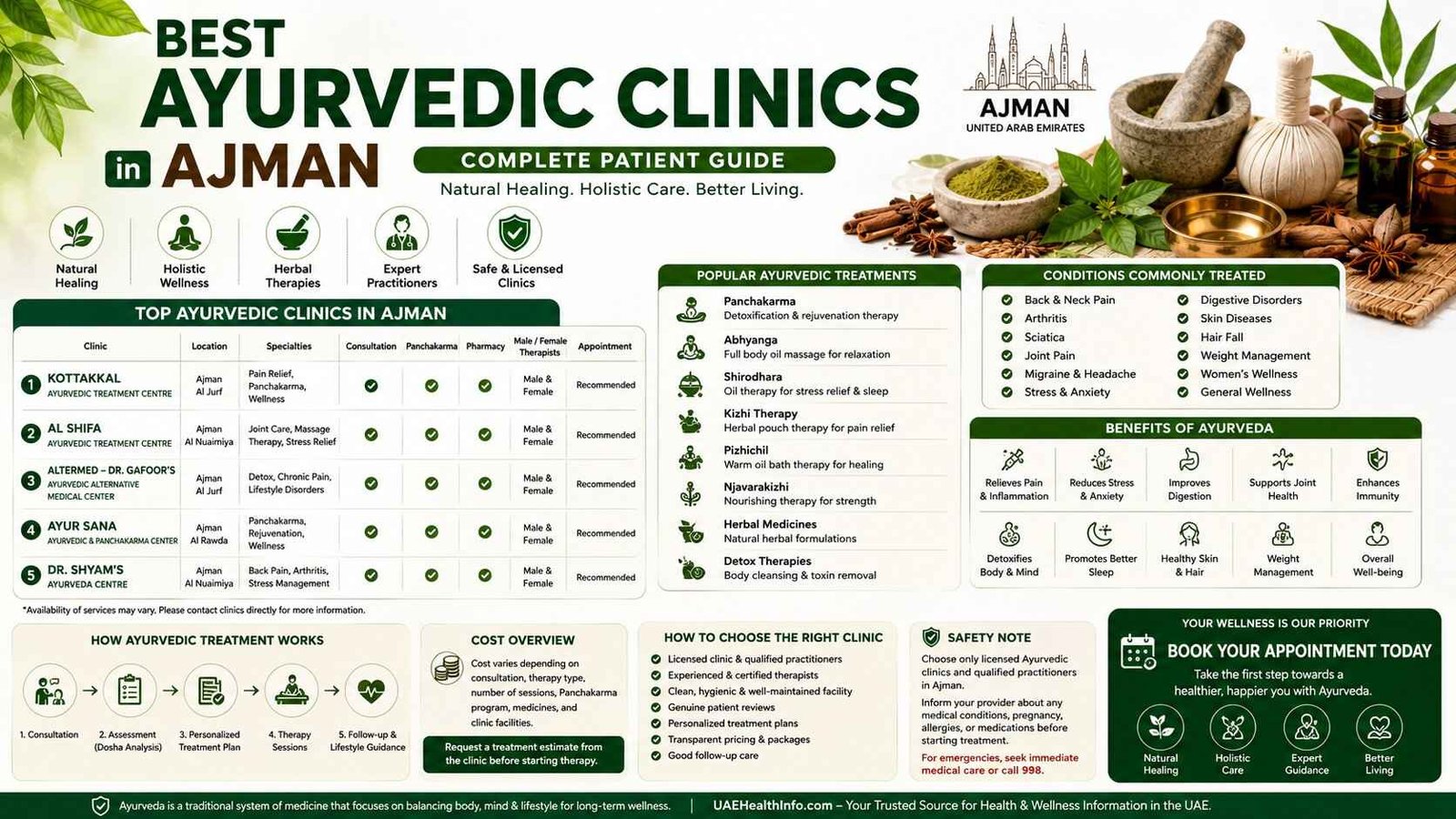
Ayurveda is one of the world’s oldest holistic healthcare systems and continues to be a popular choice for people seeking natural and complementary treatments. In Ajman, several licensed Ayurvedic clinics offer therapies that focus on improving overall well-being, relieving chronic pain, supporting recovery, and promoting a balanced lifestyle. Whether you’re looking for relief from back pain, stress, digestive issues, or simply want to improve your general wellness, an experienced Ayurvedic practitioner can recommend a personalized treatment plan based on your health needs.
Before starting any treatment, it’s important to choose a licensed Ayurvedic clinic that complies with UAE healthcare regulations. You can find official health information and healthcare guidance from the UAE Ministry of Health and Prevention (MOHAP), while clinics in Ajman operate under the relevant UAE health authority regulations.
This guide explores the best Ayurvedic clinics in Ajman, common therapies offered, consultation procedures, treatment benefits, safety considerations, and practical tips to help you choose the right clinic for your healthcare journey.
Quick Facts About Ayurvedic Clinics in Ajman
| Information | Details |
|---|---|
| Healthcare System | Traditional & Complementary Medicine |
| Location | Ajman, United Arab Emirates |
| Common Treatments | Panchakarma, Abhyanga, Shirodhara, Herbal Therapy, Kizhi |
| Consultation | Available at most clinics |
| Ayurvedic Medicines | Available at selected clinics |
| Male & Female Therapists | Available at many clinics |
| Appointment | Recommended before visiting |
| Insurance | Varies by clinic and insurance plan |
| Treatment Duration | Depends on the condition and therapy plan |
| Suitable For | Adults, seniors, and selected pediatric cases under professional guidance |
What Is Ayurveda?
Ayurveda is a traditional system of medicine that originated in India more than 3,000 years ago. The word Ayurveda combines the Sanskrit words Ayur (life) and Veda (knowledge), meaning “the knowledge of life.”
Unlike treatments that focus only on symptoms, Ayurveda aims to improve overall health by supporting the body’s natural balance. It considers factors such as diet, lifestyle, sleep, stress, digestion, and individual body constitution when developing a treatment plan.
According to Ayurvedic principles, every person has a unique balance of three biological energies, known as Doshas:
- Vata – Associated with movement, breathing, and the nervous system.
- Pitta – Linked to digestion, metabolism, and body temperature.
- Kapha – Supports strength, immunity, and body structure.
Ayurvedic practitioners assess these doshas during a consultation and recommend therapies, herbal preparations, dietary advice, and lifestyle modifications tailored to the individual.
Benefits of Ayurvedic Treatment
Many people choose Ayurvedic care as a complementary approach to support their overall health and well-being. Depending on the individual’s condition and the practitioner’s assessment, Ayurvedic therapies may help improve comfort, relaxation, and quality of life.
Common reasons people visit Ayurvedic clinics include:
Chronic Pain Management
Therapies such as herbal oil massage and heat treatments are commonly used to help manage long-term back pain, neck pain, joint discomfort, and muscle stiffness.
Stress and Relaxation
Ayurvedic treatments often focus on reducing stress through massage therapies, relaxation techniques, meditation, and lifestyle guidance.
Arthritis and Joint Care
Patients with osteoarthritis and other joint conditions may seek Ayurvedic therapies to complement their medical care and improve mobility.
Digestive Health
Ayurvedic practitioners may recommend dietary changes, herbal preparations, and lifestyle modifications for digestive concerns such as indigestion, bloating, and constipation.
Skin and Hair Wellness
Some clinics provide Ayurvedic treatments designed to support healthy skin and hair, including therapies for dry skin, acne, dandruff, and hair fall.
General Wellness
Many people choose Ayurveda not only for specific health concerns but also to maintain overall wellness through preventive care, healthy eating, and balanced daily routines.
Best Ayurvedic Clinics in Ajman
Ajman is home to several well-known Ayurvedic centers offering consultations, therapies, and traditional wellness programs. Availability of services may vary, so it is advisable to contact the clinic directly before booking an appointment.
1. Kottakkal Ayurvedic Treatment Centre
Kottakkal Ayurvedic Treatment Centre is among the recognized names in Ayurvedic healthcare and offers traditional consultations along with a variety of therapeutic treatments. Patients commonly visit for chronic pain management, Panchakarma therapies, and general wellness programs.
Common Services:
- Ayurvedic consultation
- Panchakarma
- Herbal medicines
- Pain management
- Wellness therapies
2. Al Shifa Ayurvedic Treatment Centre
Al Shifa Ayurvedic Treatment Centre provides traditional Ayurvedic therapies with personalized treatment plans developed after an initial consultation. The clinic offers services for musculoskeletal pain, stress management, and general health improvement.
Highlights:
- Experienced practitioners
- Herbal treatments
- Therapeutic massage
- Lifestyle advice
3. AlterMed – Dr. Gafoor’s Ayurvedic Alternative Medical Center
AlterMed combines Ayurvedic principles with complementary healthcare approaches. Services may include consultations, Panchakarma therapies, and wellness programs tailored to individual health needs.
Popular Treatments:
- Detox therapies
- Pain management
- Stress relief
- Lifestyle counseling
4. Ayur Sana Ayurvedic & Panchakarma Center
This center specializes in traditional Panchakarma treatments and other Ayurvedic therapies designed to support overall wellness and recovery from chronic health conditions.
Services Include:
- Panchakarma
- Abhyanga massage
- Herbal therapies
- Wellness packages
5. Dr. Shyam’s Ayurveda Centre
Dr. Shyam’s Ayurveda Centre offers consultations, traditional therapies, and personalized treatment programs for patients seeking complementary healthcare options.
Common Areas of Care:
- Joint pain
- Back pain
- Stress management
- Preventive wellness
- Lifestyle guidance
Popular Ayurvedic Treatments
Licensed Ayurvedic clinics in Ajman offer a variety of therapies based on an individual’s health condition, medical history, and treatment goals. Before starting any therapy, an Ayurvedic practitioner typically conducts a consultation to determine the most suitable treatment plan.
Panchakarma
Panchakarma is one of the best-known Ayurvedic detoxification programs. It consists of a series of therapies designed to help eliminate toxins, restore balance, and promote overall wellness. Depending on the patient’s needs, the program may include massage therapies, herbal treatments, dietary recommendations, and supervised cleansing procedures.
Abhyanga
Abhyanga is a full-body massage using warm herbal oils selected according to the patient’s body constitution (Dosha). This therapy is commonly used to promote relaxation, improve blood circulation, reduce muscle stiffness, and support overall well-being.
Shirodhara
Shirodhara involves the gentle, continuous pouring of warm herbal oil or another prescribed liquid over the forehead. It is commonly used as part of stress management and relaxation programs and may help improve sleep quality and mental relaxation.
Kizhi
Kizhi is a traditional Ayurvedic therapy in which warm herbal pouches are applied to specific areas of the body. It is often recommended for muscle pain, joint stiffness, sports injuries, and chronic musculoskeletal discomfort.
Pizhichil
Pizhichil combines gentle massage with the continuous application of warm medicated oils. It is commonly included in wellness and rehabilitation programs to help improve flexibility and support recovery.
Njavarakizhi
This therapy uses warm herbal rice bundles combined with medicated milk and herbal preparations. It is traditionally used to improve muscle strength, nourish tissues, and support rehabilitation.
Herbal Medicines
Licensed practitioners may recommend Ayurvedic herbal formulations as part of an individualized treatment plan. Patients should only use herbal medicines under professional supervision, especially if they are taking prescription medications or have chronic medical conditions.
Conditions Commonly Treated
Ayurvedic clinics in Ajman often provide complementary care for a range of non-emergency health concerns. Treatment plans vary depending on the patient’s condition and should not replace conventional medical care when necessary.
Common conditions include:
Back and Neck Pain
Massage therapies, herbal oils, stretching techniques, and lifestyle advice may help reduce discomfort and improve mobility.
Arthritis and Joint Pain
Many patients seek Ayurvedic care to complement conventional treatment for osteoarthritis and other joint conditions.
Sciatica
Personalized therapies may help relieve pain and improve flexibility in some patients with sciatica.
Stress and Anxiety
Relaxation therapies, meditation guidance, breathing exercises, and lifestyle recommendations are commonly included in stress management programs.
Migraine and Headaches
Some Ayurvedic treatments aim to reduce headache frequency and improve overall well-being through individualized care.
Digestive Disorders
Patients with indigestion, constipation, bloating, or acid reflux may receive dietary advice, herbal support, and lifestyle recommendations.
Skin Conditions
Selected therapies may support patients experiencing eczema, acne, psoriasis, or dry skin as part of a comprehensive care plan.
Weight Management
Many clinics provide personalized diet plans, herbal support, and lifestyle counseling for healthy weight management.
Women’s Wellness
Some Ayurvedic practitioners offer complementary care for menstrual discomfort, menopause-related symptoms, and general women’s health.
What Happens During Your First Consultation?
Your first visit to an Ayurvedic clinic usually begins with a detailed consultation to understand your overall health and wellness goals.
Step 1: Medical History
The practitioner will ask about:
- Current symptoms
- Previous illnesses
- Medications
- Allergies
- Lifestyle habits
- Diet
- Sleep patterns
- Physical activity
Step 2: Ayurvedic Assessment
The practitioner evaluates your body constitution (Dosha), overall health, and the possible causes of your symptoms according to Ayurvedic principles.
Step 3: Personalized Treatment Plan
Based on the assessment, you may receive recommendations that include:
- Ayurvedic therapies
- Herbal preparations
- Dietary advice
- Lifestyle modifications
- Exercise recommendations
- Follow-up appointments
Step 4: Therapy Sessions
Depending on your condition, treatment may involve a single therapy session or a structured program over several weeks.
Step 5: Follow-Up
Regular follow-up appointments allow the practitioner to monitor progress and adjust the treatment plan if needed.
Cost Overview
The cost of Ayurvedic treatment in Ajman varies depending on several factors, including:
- Initial consultation
- Type of therapy
- Duration of each session
- Number of sessions required
- Panchakarma program length
- Herbal medicines
- Clinic facilities
- Practitioner experience
Because prices differ between clinics, it is advisable to request a treatment estimate before beginning therapy.
Some clinics may offer wellness packages or discounted multi-session programs.
How to Choose the Right Ayurvedic Clinic
Selecting a reputable clinic is essential for receiving safe and effective care.
Consider the following factors before booking an appointment:
- Ensure the clinic is licensed by the appropriate UAE health authority.
- Verify the qualifications and experience of the Ayurvedic practitioner.
- Check whether personalized treatment plans are provided.
- Look for clean and hygienic treatment rooms.
- Read genuine patient reviews from trusted sources.
- Ask about follow-up care and treatment duration.
- Confirm whether herbal medicines are dispensed under professional supervision.
- Understand the estimated treatment costs before starting therapy.
Choosing a licensed clinic helps ensure that therapies are provided safely and according to UAE healthcare regulations.
Safety Note
Choose only licensed Ayurvedic clinics in Ajman with qualified practitioners. Inform your practitioner about any existing medical conditions, pregnancy, allergies, or medications before starting treatment. Ayurvedic therapies should complement—not replace—emergency or essential medical care. If you experience severe symptoms or a medical emergency, seek immediate treatment at the nearest hospital or call 998 for an ambulance.
Frequently Asked Questions
1. What is Ayurveda?
Ayurveda is a traditional system of medicine that focuses on balancing the body, mind, and lifestyle through personalized therapies, herbal remedies, diet, and wellness practices.
2. Are Ayurvedic clinics in Ajman licensed?
Yes. Licensed Ayurvedic clinics in Ajman operate under the relevant UAE health authority regulations. Always verify that the clinic and practitioner are properly licensed before beginning treatment.
3. What conditions can Ayurveda help manage?
Ayurvedic treatments are commonly used as complementary care for back pain, neck pain, arthritis, stress, digestive issues, skin conditions, migraines, and general wellness. Treatment suitability varies by individual.
4. What is Panchakarma?
Panchakarma is a traditional Ayurvedic detoxification and rejuvenation program that may include massage, herbal therapies, dietary guidance, and other treatments based on an individual’s health assessment.
5. Is an appointment required?
Most Ayurvedic clinics recommend booking an appointment in advance to ensure practitioner availability and allow enough time for a detailed consultation.
6. Are herbal medicines included in the treatment?
Many clinics prescribe Ayurvedic herbal medicines when appropriate. These should only be taken under the guidance of a qualified practitioner.
7. Is Ayurvedic treatment covered by health insurance?
Insurance coverage varies depending on your health insurance plan and the clinic. Contact both your insurance provider and the clinic to confirm coverage before starting treatment.
8. How many treatment sessions will I need?
The number of sessions depends on your health condition, treatment goals, and the practitioner’s recommendations. Some patients benefit from a few sessions, while others may require a longer treatment program.
9. Can children receive Ayurvedic treatment?
Some clinics offer Ayurvedic consultations for children. Treatment should always be provided by a qualified practitioner and may require parental consent.
10. How do I choose the best Ayurvedic clinic in Ajman?
Look for a licensed clinic with experienced practitioners, good hygiene standards, positive patient reviews, personalized treatment plans, and clear information about services and costs.
Conclusion
Ayurvedic clinics in Ajman provide a holistic approach to health by combining traditional therapies with personalized lifestyle and wellness guidance. Whether you’re seeking complementary care for chronic pain, stress management, digestive concerns, or overall well-being, choosing a licensed and experienced Ayurvedic clinic is essential for safe and effective treatment.
Before starting any therapy, schedule a consultation to discuss your medical history, current medications, and treatment goals. Remember that Ayurveda is best used as a complementary healthcare approach and should not replace conventional medical treatment for serious or emergency conditions.
At UAEHealthInfo.com, we are dedicated to helping you make informed healthcare decisions by providing accurate, up-to-date, and trustworthy information about hospitals, clinics, wellness centers, and medical services across the United Arab Emirates. Always verify clinic details, practitioner credentials, and appointment availability directly with the healthcare provider before your visit.
Safety Note
Choose only licensed Ayurvedic clinics in Ajman with qualified practitioners. Inform your practitioner about any medical conditions, allergies, pregnancy, or medications before starting treatment. Ayurveda is a complementary therapy and should not replace emergency medical care. For serious or life-threatening conditions, call 998 or visit the nearest hospital immediately.